About Caliban

I'm a long time fan of science fiction, fantasy, comic books, gaming and the like. Also a former Employee of Wizards of the Coast, and one of the founding members of the Camarilla Fan organization. Follow me on Twitter @caliban1227.

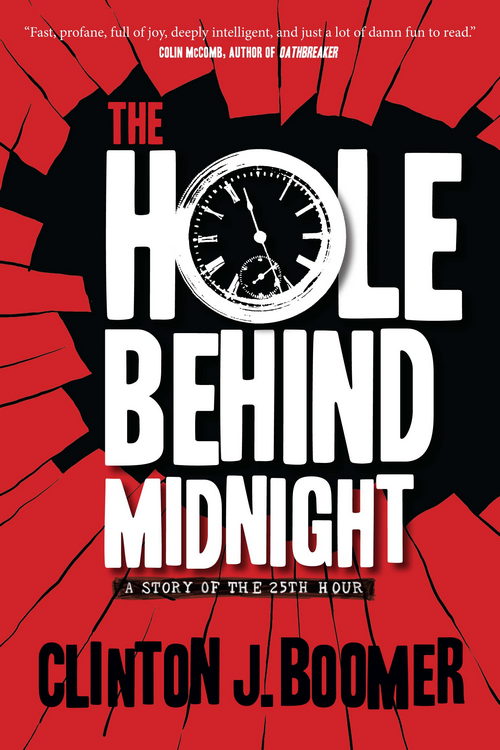
The Hole Behind Midnight Episode 1

hole behind midnight cover sketches.inddA while ago I mentioned I was working on an audiobook. Well it is now being released as a podcast.  I have received permission from the producer to link to it here. So this is going to be done much like the Hermes and Hekate Roadshow was.
So here is episode one of The Hole Behind Midnight. Book by Clinton J Boomer. Audiobook produced by Julie Hoverson.

Meet Royden Poole. He is having a bad time lately. He lost his girl friend and most people think he is dead. Too bad the police know the truth and need him to do something for them, because they don’t understand this magic BS and he does.

The Hole Behind Midnight is meant for Mature Audiences and contains strong language and adult themes. There we warned you.

You can find the main sight for the podcast here.

And is you are interested in the book, you can find details here.

And just FYI, I don’t show up in the first episode. Don’t worry I’ll show up soon.

Emperor Norton

emperor_norton

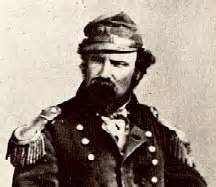
Back when I was writing about my early days at Wizards of the Coast I mentioned that ConFrancisco had a person spend the entire convention portraying Emperor Norton. I promised to explain why that was a big deal at a later time.

Well that time has come.

Norton I, Emperor of the United States and Protector of Mexico, was a prominent and beloved figure in San Francisco during the mid to late 19th century.  Not only was he embraced by the city’s residents, but he also captured the imagination of more than one author, and has been included in many stories and the inspiration for many more. All this has made him a true geek culture icon, as well as a historical one.

He was born Joshua Abraham Norton, in England sometime between 1814 and 1819, bad record keeping prevents us from knowing exactly when. He spent his early life in South Africa, and immigrated to San Francisco in 1849.

A first, he was a successful business man, but after an import venture went south (and the loss of a related lawsuit) Norton left San Francisco in 1858.

Nothing is really known of what happen during the following year, but in 1859 Norton returned to San Francisco and sent letters to several newspapers in the city proclaiming himself Emperor of the United States. The newspapers reprinted these letters, mainly for the humor value, and this just fueled Emperor Norton’s passion to carry on.

Since America was now an Empire, Norton saw no need for congress any longer and made several imperial decrees calling for its disbandment. He also called for the abolishment of both the Republican and Democratic parties, and for the U.S. army to carry out these orders. Naturally, none of these parties paid any attention to these decrees.

However, not every decree Emperor Norton made was outlandish. He called for the formation of a League of Nations decades before it actually happened, and for construction of a suspension bridge or tunnel to connect San Francisco to Oakland.

When not making decrees Emperor Norton would spend his time conducting inspections of the streets and cable cars of the city. He wore a pseudo military uniform that included epaulettes and a beaver hat with a peacock feather.

Now, it would have been easy to dismiss Emperor Norton as just delusional man wandering the streets of San Francisco but for one simple thing: the city loved him.

Businesses sought his patronage and proudly displayed his imperial seal of approval. He ate at the finest restaurants in town, and theaters made sure he had reserved seats. Imperial money he printed himself was accepted by local businesses, and to this day are considered valued collector items.

So beloved was Emperor Norton that he is credited with once stopping an anti-Chinese riot by positioning himself between the rioters and their targets, kneeling and reciting the Lord’s Prayer repeatedly until the mob lost their zeal and went away.

Today anyone acting the way Emperor Norton did would be put under psychiatric care. Well, actually, someone tried that in 1867. A young police officer arrested Norton to have him committed. The city was outraged and the police chief ordered Norton released and issued a formal apology. The Emperor himself issued an imperial pardon to the officer that arrested him. From that day on all police officers saluted Emperor Norton when they passed him on the streets.

On January 8th 1880, Emperor Norton suffered a fatal heart attack while walking. Not surprising, he was impoverished, having less than $10.00 to his name. The business community of San Francisco refused to let him be buried in a pauper’s grave, and paid for what amounted to a state funeral that was attended by 30,000 of the city’s 230,000 residents. His grave stone reads “Norton I, Emperor of the United States and Protector of Mexico.”

The story of Emperor Norton is one that has captured the imagination of so many that naturally has inspired several authors.

Mark Twain, who lived in San Francisco during Norton’s reign based the character “the King” in The Adventures of Huckleberry Finn directly on Norton

Robert Louis Stevenson made Norton a character in his novel The Wreaker.

Neil Gaiman wrote an issue of The Sandman about Norton.

Barbara Hambly included him in her Star Trek novel Ishmael.

Author Christopher Moore has written several supernatural humor novels set in modern day San Francisco. In these novels there is a prominent character called “The Emperor” who is clearly based on Norton.

And that is just scratching the surface of the works he has inspired.

Emperor Norton has even become a religious figure. Discordianism has made him a Saint Second Class.

In the end, there was clearly something special about this man. He may have been living in his own world, but it was a kind place that he managed to share with the rest of us and left us some great stories to keep us inspired.


Agents of S.H.I.E.L.D. review

agents-of-shield-logo

I doubt any series this fall had more anticipation than Marvel’s Agents of S.H.I.E.L.D. did. It had the best quality any new show could hope for, a pre-existing fan base. As an official part of the Marvel Cinematic Universe it could bring in the fans of those movies, especially The Avengers as it ties directly in to events from that film.

But tying in to one of the most successful films of all time is no guarantee of success. So how does Agents of S.H.I.E.L.D. fare?

Let’s find out.

The best thing that Agents of S.H.I.E.L.D.  has going for it is the character of Agent Phil Coulson played by Clark Gregg. Coulson has appeared in four of the Marvel Cinematic Universe movies and been the star of two short features. Two years ago I wrote an article called the Eighth Avenger that was speculation based on the fact that Tom Hiddleston had said Loki was going up against eight heroes, and I was trying to figure out who the eighth hero was. Clearly, after the events of The Avengers he was including Coulson in the count of heroes he faced.

Coulson has a huge fan base. Within days of the release of The Avengers there was a fan campaign to bring back Coulson, who was killed during the course of the film. The series is basically the fans getting what they asked for. Marvel even used the fan created hashtag #Coulsonlives in its ad campaign.

For those who have not tuned into the show, the premise is that S.H.I.E.L.D.  Director Nick Fury has given Coulson the go-ahead to form a proactive unit of hand-picked agents whose job will be to investigate strange happenings around the globe.

Making up the team are a mix of agents who Coulson needs to forge into this unit.

First is Melinda May (played by Ming-Na Wen), an old associate of Coulson’s who is something of a legend in S.H.I.E.L.D., but has to be coaxed back into the field after an as yet unexplained incident.

Next is Grant Ward (played by Brett Dalton), an agent who has been trained for solo work (which makes being part of a team uncomfortable for him).

Leo Fitz (played by Iain Caestecker) and Jemma Simmons (played by Elizabeth Henstridge) are the team’s scientific support, and work so closely together they are normally referred to as Fitz-Simmons.

Finally you have Skye (played by Chloe Bennet), a hacker who works with the anti-S.H.E.I.L.D.  hacktivist group Rising Tide, who is brought on in part to convince her (and through her the Rising Tide) that S.H.I.E.L.D. are the good guys. This, of course, makes her the audience surrogate and the way the other characters can provide exposition.

Behind the scenes, the series is produced by Joss Whedon, with the show run by his brother Jed and sister-in-law Maurissa Tancharoen, with Jeffrey Bell and Jeph Lobe.

On the plus side, the series has the tie-ins with the Marvel movies, as well as a chance to bring in more characters and concepts from the comics. There have already been cameos in the first two episodes by Cobie Smulders and Samuel L. Jackson, reprising their movie roles and Maria Hill and Nick Fury. The third episode also hints at being the origin story of the Marvel villain Graviton.

You also have Coulson himself, who brings his character’s trademark dry humor to the role, as well as providing the show with the ongoing mystery of how Coulson survived being stabbed with the alien staff by Loki. So far, all we know is that the story Coulson himself has been told is false, and that little things about him are off. Fan speculation is rampant about what the real story is.

There are great performances from the entire cast, but this also points out a couple of the shows weaknesses.

One weakness is that we are not getting an even playing field in regards to character development. Most episodes have had a focus on Skye, and thus she has gotten the majority of that development. Fitz and Simmons, on the other hand, have had almost none and I can’t say I know more about them than at episode five than I did from the pilot.

There is also a huge disconnect in the idea that this is a hand-picked elite team. This idea works great with Coulson, May, and Ward. Fitz and Simmons on the other hand are great in the lab, but every time they take them into the field they come off as borderline incompetents.

Overall, the team has the feel of your standard Whedon show: a talented team of misfits who are great in some areas but terrible in others come together and ultimately form a makeshift family unit. Great in most cases, but this is supposed to be an elite government task force.

This is not to say the show is bad; I am enjoying it very much. The problem is that, considering it is an official Marvel show, there are some pretty high expectations that are not being met and this is leaving people feeling disappointed.

However, I think it is fair to point out that only five episodes have aired. Whedon’s last show Dollhouse basically had similar complaints, but suddenly changed gears and really took off with its sixth episode.

So, for right now, I am going to give Marvel’s Agents of S.H.I.E.L.D.  a grade of C+. It is a decent effort, but it needs to pick up steam.

At the end of this season I will do another review of the series, and we will see what the final grade is then.


Universal Horror: The Wolf Man

Wolfman

The Wolf Man is a 1941 horror film from Universal Pictures. Even though it came out a decade after the releases of Dracula and Frankenstein, it stands with them as one of the all-time horror classic films and the three characters form that iconic trinity of horror icons.

The Wolf Man stands apart from the other two films in that it is not based on any pre-existing work; it is, instead, an original screen play by Curt Siodmak.

The Wolf Man was Universal’s second attempt at a werewolf movie. Six years earlier, they had produced The Werewolf of London. While that film was a moderate success, it was considered a knock-off of Dr. Jeykll and Mr Hyde, which hampered it at the box office.

As with any review of classic Universal Horror, the challenge is to try and review it separately from the pop culture it helped create.

The plot revolves around Lawrence Talbot, the son of Sir John Talbot. After the death of his older brother, Lawrence returns to the family home in Wales, after spending the last 18 years in America. Lawrence and Sir John have a slightly strained relationship, due to Lawrence being the second son, and thus not heir to the title and estate. With his brother is dead, things have changed and both men mean to make amends with one another.

Lawrence becomes smitten with Gwen, a shop girl in the local village. He convinces her to join him at a carnival being put on by a tribe of Romani (the movie uses the term gypsy through-out, but since that is often considered a slur, for the purposes of this review I am going to use the term Romani).

At the carnival Gwen’s friend Jenny is attacked by a wolf that Lawrence kills with the silver headed cane he bought earlier from Gwen’s shop. Bitten during the fight with the wolf, Lawrence comes to realize that what he fought was actually a werewolf and that he has now had the curse passed on to him.

To a modern audience, this movie is not going to seem frightening on a jump scare level, but what does stand the test of time is the mental toll the curse takes on Lawrence as he comes to accept what has happened to him, and tries to find a way to deal with it.  The movie also plays with psychological horror, as most people believe that Lawrence is losing his mind and merely hallucinating that he is a werewolf.

Director George Wagner creates a suitably moody atmosphere, by 1941’s standards, including several shots that would come to be considered iconic, including several of the misty Welsh moors. He also put together an excellent cast. It is clear that Universal wanted a hit.

Naturally the movie rests squarely on the shoulders of Lon Chaney Jr. While not his first major role (having played Lennie two years earlier in Of Mice and Men) starring in The Wolf Man was significant, as he was firmly stepping into the horror genre that had made his father a star. The part calls for him to start as a jovial ladies man, but end as a character that would be at home in a Greek tragedy.

Claude Rains was already a Universal Horror star, thanks to his lead performance in The Invisible Man. As Sir John Talbot he conveys a man who hopes to mend fences with his son, only to see that hope dashed as he believes Lawrence is succumbing to madness, and later has to make a tragic choice when the grim truth is made clear. It would have been easy for this part to have been played as disapproving father, but Rains elevates it by making Sir John aloof, yet loving.

Oscar winning actress and revered Hollywood acting coach Maria Ouspenskaya plays  Malva, the Romani woman whose son inadvertently passes the curse on to Lawrence. It would have been easy to have Malva be a sinister figure, but between the script and Ouspenskaya’s performance she is one of the most sympathetic characters in the movie, and the only person to truly try and help Lawrence.

Bela Lugosi appears as Malva’s son, also named Bela, whose bite infects our hero. He plays the part well, but it seems like an oddly small part for such a big name making it seem like a case of stunt casting.

Evelyn Ankers plays Gwen, the shop girl Lawrence becomes enamored with. She conveys her affection for Lawrence well and her concerns for him as his troubles mount. I find this notable, as Ankers and Chaney very famously did not get along. Despite this, they ended up starring, opposite each other, in four movies.

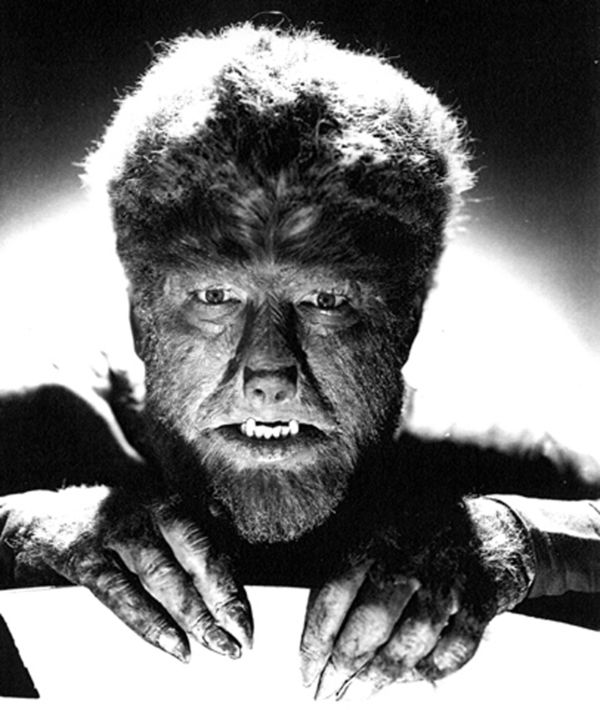
No review of this film would be complete without making note of the Wolf Man makeup, created by legendary makeup artist Jack Pierce.  The iconic look of the Wolf Man would serve as the model  for werewolves, in film, for years to come.

But the real legacy of this film is the werewolf lore it created. Almost everything we take for granted in werewolf mythology was actually created from scratch in the script by Curt Siodmak. The curse being transmitted by a bite, the vulnerability to silver, the involuntary transformation, the mark of the pentagram, and iconic poem are all creations specific for this movie. Interestingly the transformation under the full moon was not from this movie, but came in the Siodmak’s script for the sequel Frankenstein meets the Wolf Man. In fact the moon is never seen in the film at all.

The other horror trope codified in this film is the misty moors. In fact, the back drop of the moors used in the opening credits was reused by several other Universal Horror films, as it conveyed the mood so well.

Overall, I give The Wolf Man a solid B. It is a superior film for its era, and any classic horror film fan should make a point of seeing it.


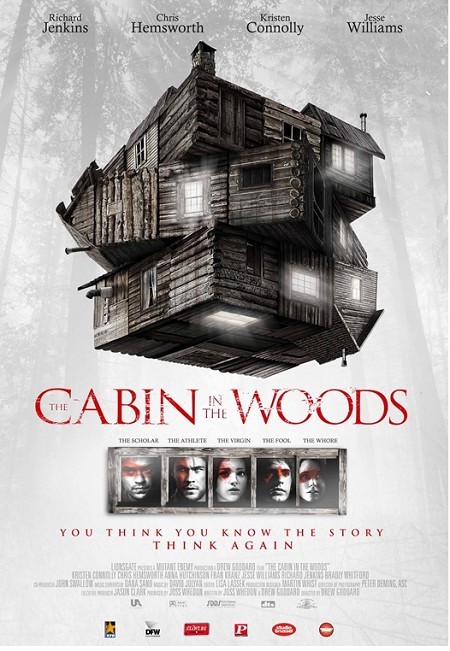
Horror Review: The Cabin in the Woods

the-cabin-in-the-woods

The Cabin in the Woods is a hard film to review.

Not that I didn’t understand it, or would have problems explaining the set up, it’s just that it has a complex script, and is full of clever reveals that are best viewed unspoiled. The problem, I find, is how to write about the plot without spoilers; I’m basically going to adapt the rule that anything revealed in the first 10 minutes is fair game.

But before we get into the plot, some background:

The script is by fan favorites Joss Whedon and Drew Goddard, and the film marks Goddard’s debut as a feature film director. Even though Goddard directed, this is considered a Joss Whedon project due to the scripting and the fact that he produced it. Also, the cast is filled with several Whedon regulars.

The movie was made in 2009. Unfortunately, due to several factors(not the least of which was the Bankruptcy of the MGM studio), the film was not released until 2012.

Okay, with that out of the way, let’s get into that plot.

The Cabin in the Woods follows five college students as they prepare to spend a weekend at The Cabin in the Woods, that was recently purchased by one of their relatives. The students are Curt and Jules who are a couple, Jules’ roommate Dana, Curt’s friend Holden (whom he and Jules are trying to match-make with Dana), and Marty (their mutual friend, whose dominant characteristic seems to be that he is a stoner). While prepping for their trip, the five are under surveillance by a mysterious group.

And that is all I feel I can safely say without spoiling anything.

What The Cabin is the Woods really is, is a self-aware deconstruction of the horror genre.  It does for supernatural horror what Scream did for slasher films. But it goes even more meta than that.

The script plays heavily with standard horror tropes; however, instead of defying them, it reinforces them( but in a very coherent way), all the while pointing out the ridiculousness of many of them. The best part about it is that at no time does the movie assume the audience is stupid which, in this type of horror film, is incredibly refreshing.

The film creates a connection, not just to the five designated victims, but also with the people behind their torment. It’s no easy feat to make you sympathize with both the heroes and the villains, but Whedon and Goddard find a way to do it.

It’s also worth noting that while the five friends all fit standard horror movie character types, each one also contains major subversions of those types.

Looking towards the cast you find a mix of unknowns and fan favorites.

Chris Hemsworth is the most notable name in the cast, even if this was not the case when the movie was filmed. Playing Curt, who fills the alpha male archtype standard to the genre, Hemsworth of course has the look, but also has to convey an intelligence required by the subversions in the script. A fun bit of trivia, Whedon finalized the deal to make The Avengers while working on The Cabin in the Woods and reached out to Thor director Kenneth Branagh, who was casting at the time, to suggest he take a look at Hemsworth for the lead.

Kristen Connolly stands out as Dana, who is fit into the
standard final girl role. Of course this role is going to get focus and Connolly pulls it off well.

The true stand out of the five kids is Whedon regular Fran Kranz as Marty, the stoner fifth wheel. Filling a role very similar to Jamie Kennedy’s character in Scream, Marty is the one member of the group aware that something is not right with their situation. Kranz manages to combine the characters laid back philosophy, while still conveying his increasing awareness, making him an excellent audience proxy. Again a bit of trivia. During a scene were the other characters go swimming, Marty stays on the dock and smokes a joint. The reason is that, in reality, Kranz is very athletic and actually has better muscle tone then Hemsworth, and Goddard did not think it would be a good idea for the stoner to be shown in better shape than the Jock.

Ana Hutchison and Jesse Williams do fine in the roles of Jules and Holden respectively, but neither really stand out in the way the other three do.

Two other amazing cast stand outs are Richard Jenkins and Bradley Whitford as the leaders of the group that is observing the kids. I wish I could point out what makes them stand out, but there is nothing I could say about them that would not be a spoiler.

Working with Jenkins and Whitford, you will spot Whedon regulars Amy Acker and Tom Lenk.

There is one other stand out actor who appears towards the end of the movie, but to even name who that actor is would be a spoiler. Yes the film really is that intricate.

But I think it illustrates the strength of the writing that, even with a script that intricate, at no point does it become confusing or not make sense.

Using the Fanboy News Network rating system I give The Cabin in the Woods an A. It is a top flight effort that even non-horror fans can enjoy, and is ripe for repeat viewing.

A testament to the films popularity is that this year at Universal Studio’s Halloween Horror Nights in Orlando, one of the signature haunted mazes is based on The Cabin in the Woods. And yes, that maze has spoiler warnings.

Horror Review: Jekyll

jekyllJekyll is a 2007 six episode BBC miniseries written and produced by Doctor Who writer, and current show producer, Steven Moffet. It was his first take at doing a modern interpretation of a classic Victorian character, which he of course followed up on, 3 years later, with Sherlock.

The series follows Dr. Tom Jackman, a successful research scientist, who inexplicably starts transforming into another persona, complete with physical changes. Fearing the violent behavior of the other persona, Jackman leaves his family, quits his job, and sets up an apartment where he can try to unravel what exactly is happening.

With the help of recordings and surveillance equipment, the two personalities are able to communicate enough to come to an arrangement that basically equates to a time share agreement on their body.  To facilitate this, they hire a psychiatric nurse named Kathryn to act as an impartial aid to both of them.  Once the other personality learns about the book The Strange case of Dr. Jekyll and Mr. Hyde he adopts the name Billy Hyde.

Additional complications to the arrangement include: Jackman wanting to keep the existence of his wife and twin sons from Hyde, fearing he might harm them; his wife hiring an investigator to try and learn why he left his family; his old employer, and friend, wanting to know the same; and why a mysterious organization is now following him, claiming to be Hyde’s owners.

And all that is just part of the first episode.

Jekyll is a smart series that uses its set up to explore several questions. Of course you have the concept of duality, as you always will with the Jekyll and Hyde story. You also have a recurrent question through the series, is Hyde actually evil, or is there more to him? And like the original story, the heart of it is the mystery: why is Jackman transforming in the first place?

Two things make this series really stand out; the smart script by Moffet, and the acting. Moffet does not fall into the easy clichés of the traditional interpretations of the characters, but instead looks at them from a more layered perspective. The horror comes from the idea of Jackman not being in control and Hyde possibly hurting his family. Several tense scenes are based on Jackman waking up from being Hyde, at least once covered in blood, and having to piece together what Hyde has done, fearing the worst. There is also the dread that Hyde is taking over and one day will not turn back into Jackman.

From the acting side, any show like this is going to live or die by the lead actor, and how he handles the dual role. Fortunately Jekyll had the good fortune to cast James Nesbitt as Jackman/Hyde. Non-UK readers will know Nesbitt primarily as Bofur in The Hobbit movie. The challenge is making Jackman and Hyde distinct characters. It would be one thing to just play Hyde as completely over the top, and while he is at times, there is more to the character than that and Nesbitt makes that clear. The makeup for Hyde is subtle, just enough that he is recognizably different but can still be mistaken for Jackman at first glance. Nesbitt manages different body language and vocal styles for the two characters, and it is clear which is which even if he is far away enough that you can’t see the makeup.

Another stand-out, in the impressive cast, is Gina Bellman as Jackman’s wife, Claire. Audiences will recognize her as Jane from Moffat’s sitcom Coupling, as well as being the grifter Sophie on the TNT series Leverage. Claire has an impressive arc, as she struggles to deal with her husband abandoning his family and her growing realization of what is happening to him. Her story arc is as central to the show as is Tom/ Billy’s.

Other notable cast members include: Denis Lawson (who was Wedge in the Star Wars films) as Jackman’s friend and former boss, Michelle Ryan (who was Jaime Summers in the brief Bionic Woman reboot) as the nurse Jackman and Hyde hire to help facilitate their arrangement, and Paterson Joseph (the Marquis de Carabas from Neverwhere) as the mystery man claiming that his company owns Hyde.

But for all the good things about Jeykll, there is one glaring problem, the final scene of the series.

I’m not going to spoil it here, but everyone I have ever talked to about the series, who has seen it, agrees that the final scene is terrible, and makes several plot points in the series make no sense. And that it was not needed. You could have ended the series on the previous scene and had a satisfying end. Also the final scene basically ends as a sort of cliff hanger, and since there was no second series it leaves the story in limbo.

I’m not sure why Moffet felt the need to include this particular plot point, other than perhaps he thought it was a cool idea, which it might have been if there had been more there to mitigate the plot holes it creates.

Using the Fanboy News Network rating scale I give Jekyll a B+. It is a superior effort, but the last scene keeps it from getting an A.

Horror Review: Shutter

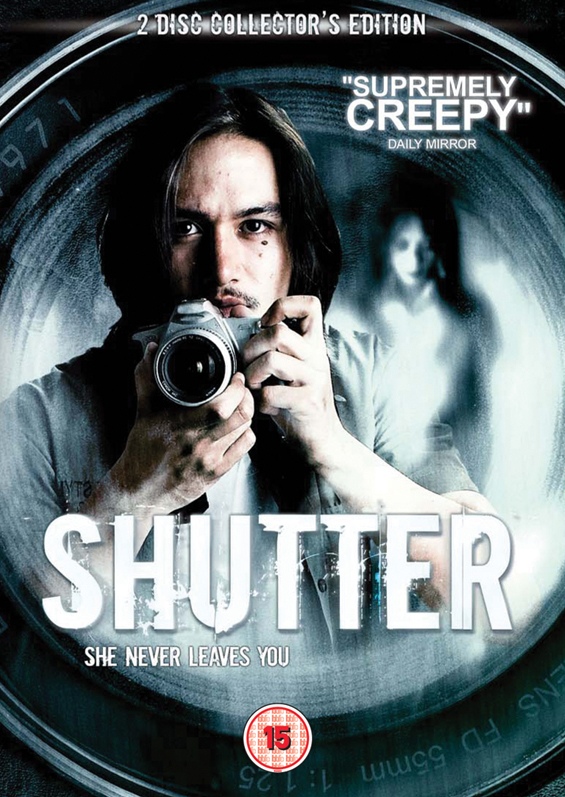
shutter2dShutter is a horror film made in Thailand, in 2004. It is clearly inspired by the wave of horror films, coming predominately from Japan, that have come to be known as J-Horror.

After a night out drinking with friends, our main characters Tun and Jane are driving home when their car hits a woman. Freaking out, Tun insists that they not get out of the car and just head home. After the accident Tun, who works as a photographer, starts finding strange images in the pictures he takes. This leads him, and Jane, to start learning about the phenomena of ghost photos.

As the haunting escalates beyond the photos, invading their lives, Tun and Jane attempt to learn exactly whom they had hit, and what really happened. Things get more desperate when they learn that the friends with whom they had been out drinking have also been having strange encounters, and that two of them have died.

As the mystery unfolds, we learn that there was more going on than a simple hit and run, and that the ghost may have an honest grievance against those she is targeting.

Shutter is a masterfully made horror film. The directing and writing team of Bangjong Pisanthankun and Parkpoom Wongpoom  have a clear understanding of how to pace the film, which is where so many horror films fail. The tension is built expertly throughout the film and, unlike so many horror films, does not switch to action movie pacing during the third act.

Their writing is also top notch. They set up a standard horror movie premise in the beginning, and then a series of twists wherein something else was going on all along. And while these twists are well done, they are not M. Night Shyamalan twists that happen at the end and seem to be the point of the whole movie. Instead they are well integrated into the script and make perfect sense once revealed.

The movie also integrates elements of several horror traditions. Clearly the main one is typical of J-Horror, with the angry female spirit seeking vengeance.  You also have elements of standard EC horror comic plots, with someone who has been wronged, coming back from the grave to wreak their own brand of justice. There are even nods to Hitchcock in the film. But most importantly, all of these are subtle and do not detract from the story itself.

The acting is well done, especially by Ananda Everingham as Tun, and Natthaweeranuch Thongmee as Jane. Their reactions come off as authentic and believable.

The one element that really struck me, while watching the movie, was the cinematography. This is a movie that has photography as a major theme, and thus color and composition are going to be key to making that seem realistic. Cinematographer Niramon Ross does a brilliant job with this work, making this an important part of the story telling. It also ends with one of the most powerful and haunting images I can remember in recent horror.

I want to take a moment to talk about the jump scares. This is a pet peeve of mine in horror. I have nothing against a good jump scare; what I hate are false jump scares. The tension is built, the jump scare happens, and it turns out to be the cat, which then immediately leads to the actual jump scare. This never happens in Shutter. Each jump scare is legitimately the ghost. There are even some rapid succession jump scares, but they are still always the ghost. To me this shows that the directors knew what they were doing, and trusted their material.

It is worth noting that Shutter has become a fairly influential film, with eight remakes (seven in other countries, including the U.S., and one in Thailand).

Using the Fanboy News Networking rating scale, I give Shutter a grade of B+. Horror fans will love it, and non-fans should at least feel that they did not waste their time. It is a must have for any horror fan’s DVD collection.

The Safe House Restaurant

safe house

I mentioned the Safe House back when I was talking about trips to Milwaukee for Wizards of the Coast. It was a natural hang out for a bunch of geeks in town for a convention. However, I did not take time to describe it, as no short blurb would do it justice, and those columns were already so long.

So, as promised, here is the story of the Safe House.

The Safe House is a spy themed restaurant and bar located in Milwaukee, Wisconsin, that opened in 1966. It is easily the most interesting themed bar I have ever been in. This is due to just how into the spy theme they have gotten.

First off you have to find it. Part of the fun is the amount of secrecy involved. Going here to their web site even includes an agreement to not disclose their location. Please tell me I don’t need to explain the joke on that last one.

Let’s take a step back, for a moment, and go over the experience from the beginning. First off, be warned that the last time I visited Milwaukee was in 1994, but I suspect that what I experienced then is still largely true today.

The first time I went there was  with other folks from WotC in 1993, while we were in Milwaukee for Gen Con. I didn’t know what to expect, only that the Gen Con veterans said that going was a must. We took cabs, as none of us expected to be in driving shape later that evening.

The setup is interesting. First off there are no signs that say Safe House. What you do find is a door in an alley with a plaque over it that says “International Import and Export”. Going through that door, you find yourself in a small office. There is a person sitting at a desk who asks if he can help you. One of the people in my group knew the password, so we were fine. (No, I am not going to give you the password; it’s been 19 years, for all I know it is different now, anyway.)

But not to despair if you do not know the password, the person behind the desk can help you out, as long as you pass a test of loyalty. The test can vary: you might have to try and use a hula hoop, you might have to put on a wig and sing and dance to Stop in the name of Love, or you might have to put on bunny ears and hop around the office singing Little Bunny Foo Foo. No matter which of the events transpire eventually the person behind the desk will be satisfied and will press a button, causing a bookshelf to open up. Through the bookshelf is a hallway reminiscent of Get Smart. At the end of the hall way is an automatic door that opens into the bar proper. If you had to perform a test of loyalty you may find yourself getting a round of applause, as there is a video feed from the office that can be viewed in the bar.

Even with pictures, you couldn’t really do the Safe House justice by describing it. The interior design is a bit of a maze. It has three floors (well, really four, but I will get to that). Back in 93 there were three bars, which I assume is still the case. The main one (right by the entrance), a small one on the second floor, and a medium one of the third floor. There were various seating areas including a dining area, smaller dining tables styled as holding cells, a seating area with booths featuring beaded curtains, and traditional bar seating. There were also pneumatic tubes that connected the bars, through which they could send each other messages, but usually there were only glow sticks moving through so that there was some visible action.

But it was actually the other theming elements that really made the Safe House fun. A simple one was that the bartender at the small bar on the second floor was also a magician. Others were more involved.

There were two different alarms that would go off periodically. The first sounded like an air raid siren. It went off whenever anyone ordered a drink called the Spy’s demise. This was a drink that had (and likely still has) a limit of one per night, due to how strong it was, and which had to be ordered at the third floor bar, so they could keep track. The siren went off as soon as you were handed the drink.

The other alarm sounded more like a bank alarm. I asked our waitress what it was about, and she told me that in the women’s restroom was a nude picture of Burt Reynolds with a flap covering his crotch; the alarm would go off whenever someone lifted the flap.

There was another special drink called the Hail to the Chief. You did not order it for yourself. It was a drink your friends would order for you, and had to be done at the main bar. When it was ordered, the recipient was escorted from their seat and taken down to the basement and placed in an interrogation chair. They would then be asked questions, mostly personal and some just oddball. Once the interrogation was over they were handed their drink.

And then the chair they were in would rise up and carry them to the main floor where they found themselves facing the bar. A screen at the bar would start playing a video and the captions in the video would make use of the information learned during the interrogation.

Two other elements, that I personally enjoyed, were the payphone booths. Again this was 1993/94, in the days before everyone had a cell phone. The first of these was called the alibi phone; it was a normal payphone booth, except that it was fairly well soundproofed, and it also had a panel with a dozen buttons that were labeled with things like “bowling alley”, “airport”, or “Italian restaurant”. You could make a call, and press a button to cause a recording of background noise (appropriate to what you selected) that would play on loop, during your call. The other phone booth was what I called the escape phone.  You went in, picked up the phone, and put in a quarter. The phone gave you a number sequence. You entered the sequence into the phone and a wall opened to a stair case that lead you to the basement, past the interrogation room, and out of the bar. It was one of three exits the bar had.

These were not the only touches the Safe House had, but I don’t want to give away everything and, in nineteen years, I am sure there have been changes.

What I remember most about going to the Safe House was the fun that came from the total dedication to the spy theme, not just in how it was set up, but from the staff as well. You could have the best themed bar in the world, but if the staff wasn’t supporting it, it would just fall apart. Fortunately, the Safe House did not have that problem. The staff was engaging and pleasant.

In the years since, I have often thought about the Safe House, and wished that we had a place like it in the Seattle area. The problem is that you need to have a community that can support such a place. Locally, we now have a lot of geek themed restaurants, like the AFK Tavern that I wrote about previously. But these are general geek themed, and not as specific or as immersive as the Safe House. I think the reasons are that it would be a huge risk to make something like that fly and you need regular patronage. Seattle is not known for its night life and even well liked clubs and bars will fold, and so a specialty place would be a hard sell. I think the same can be said for a lot of cities, which is why places like the Safe House are so unique.

As for the Safe House being the best themed bar I have ever visited, this is true, but my sister, who never had a chance to visit it, challenges that she found a better one. Time Scare in New York, which is a horror themed bar, with a year round haunted house attraction.

Until either I finally visit New York, or she visits Milwaukee we may never know.

But if you find yourself in Milwaukee, I highly recommend seeking out the Safe House.

Just don’t tell them I told you to.


DC Comics PR Meltdown

batwoman-maggie-It’s been two years since the launch of the New 52, so it’s time to look at the state of DC comics again. Last year at this time, I took a look at the individual titles that make up the new 52 and how I thought they were doing. I cannot do that this year; two months ago I stopped collecting all DC titles.

If you have been following me for a while, then you know how much of a DC comics fan I am. If you are new, here I suggest clicking on the DC comics tag at the bottom of the column. But if you have been following me, you also know I have been very critical about the direction DC comics has been going. Over several months I started slowly dropping titles, as I had decided I should not be reading books I was not enjoying. Two months ago was where I hit the point of looking at what was going on at the company over all, and decided to vote with my wallet and drop them completely. I found that DC comics overall had just become a joyless place, where every book was being written like it was Batman, and the Batman titles were being written like they were a Lars Von Trier film.

And then this last week happened.

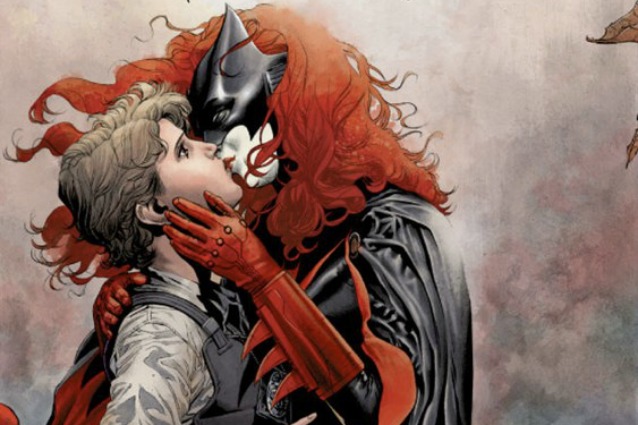
I find it interesting that everything hit critical mass at the 2 year point on the New 52. It all started on September 5th when J.H. Williams III and W. Haden Blackman, the writers and artist for Batwoman, were leaving the series with issue #26. Their reason for leaving was given as last minute editorial meddling on an already approved storyline. In this case, it was the marriage between Batwoman and her girlfriend Maggie Sawyer. With same-sex marriage being a major social issue, this got a lot of attention.

To be clear Williams and Blackman gave their reason for leaving as constant editorial interference, not specifically that there were not being allowed to follow through on the marriage.

Keep in mind that this has been a common complaint over the last two years. Talented creators leaving DC, for this reason, has become so common that the site Gutters and Panels created a timeline about it.

On September 7th at Baltimore Comic Con during a DC Nations panel, DC Comics Co-Publisher Dan Didio clarified the company’s position: Didio said that they have no problem with gay marriage; they just don’t want any of their heroes to be married, gay or otherwise. Didio went on to say that to be a superhero is to sacrifice your own happiness. In other words none of the heroes in the DC Universe can have a happy personal life, and that includes being married.

It was also announced that Mark Andreyko would take over as the new writer on Batwoman with issue #24. This means that Williams and Blackman will not be doing the last two issues of their run as they planned.

This led to one unnamed DC executive being asked “what about Aquaman and his wife Mera?” The executive clarified that Aquaman and Mera are King and Queen of Atlantis, but that they are not actually married. This came as a surprise to Aquaman’s current writer Geoff Johns.

While this was bad enough, DC had another problem come up at the same time. An artist talent search was announced. Basically, this contest involves drawing four panels of the character Harley Quinn, based on description’s from the writer of her new series, Jimmy Palmiotti. The problem arose from the description of the fourth panel:

Harley sitting naked in a bathtub with toasters, blow dryers, blenders, appliances all dangling above the bathtub and she has a cord that will release them all. We are watching the moment before the inevitable death. Her expression is one of “oh well, guess that’s it for me” and she has resigned herself to the moment that is going to happen.

People complained about the promotion of a “sexy suicide”.  It was later clarified that the sequence in all four panels involved Harley breaking the fourth wall and discussing the absurd situations her writers put her in. Palmiotti eventually took the blame for the uproar, for not providing context to the scene. However even with context there are a lot of people upset simply by the imagery.

Both situations were bad enough, but DC found a way to make them worse. In both cases, DC co-publishers Dan Didio and Jim Lee took to twitter to defend their positions.

If you follow this link, you will find a listing of how Didio defended the prevention of Batwoman’s marriage and spun the departure of Williams and Blackman as a good thing.

And if you follow this link, you can see the very long twitter thread that Lee made explaining context in sequential art.

After reading both threads there was one conclusion I was able to come to: neither Didio nor Lee have much respect for their fans. Both took condescending tones on twitter, and dismissed fan concerns out of hand.

That last really doesn’t surprise me much. Both have displayed this behavior before, especially at conventions. It can also be seen in how they have been handling the overall promotion of the DC comics universe for a while now. Between the overall presentation of the new 52, or particular storylines such as the Superman/Wonder Woman romance, there has been the underlying message. Unfortunately that message is “this is what you are going to like, and we are going to keep hammering you with it until you accept this.”

It should go without saying that the fan reaction has not been positive, but again this is nothing new. There is now a website called Has DC done something stupid today. If you go to the link, you will see it has a counter for how many days it has been since they posted something fitting their criteria of something stupid. The record so far is eight days.

Due to his position at DC Comics, and his public visibility, Dan Didio has been the focal point in all the online discussions related to DC’s direction. For example, fans on twitter have created a hashtag #firedidio as a place to vent their frustration over all of the above issues as well as the handling of the company overall.

But not every bit of coverage has been against DC. Rich Johnson, of Bleeding Cool, wrote an editorial in response to #firedidio defending the DC co-publisher and citing the good things he has done for the industry.

So where does all of this leave us?

As I made clear at the beginning, I personally am not happy with the direction DC comics is going in. From the beginning, I feel that the New 52 was a hastily thrown together project. Rather than take the time to put together a cohesive reboot of the DC Universe, a rush job was done without any clear vision, and the result has been a muddled mess.

On top of that, you have had the editorial turf wars and the non-stop executive meddling in the process. If there has been a consistent narrative that has emerged, it is that DC comics no longer values its creators. Writers and artists, even well respected ones, are now considered disposable as the editors ride roughshod over them.

Does this mean that the ire directed at Dan Didio is deserved? I think the answer is yes and no.

From the outside, the problems appear to be on a corporate culture level at this stage. This means it comes from the top down. In this case, we have four people that need to be held accountable. DC Entertainment President Diane Nelson, DC Comics co-publishers Dan Didio and Jim Lee, and DC Comics Editor-in-Chief Bob Harras.

There could be an argument made that Chief Creative Office Geoff Johns should be included here, as well, but his duties in that role involve DC properties outside of comics so, in this regard, he is a writer who happens to have a great deal of influence.

Lee is in a similar boat, in that although he is co-publisher he appears to spend a lot of his time on outside branding and lives on the west coast, so is not often in DC Comics New York office.

Bob Harras, on the other hand, is a flash point for a lot of fan ire. As Editor-in-Chief, he has certainly been involved in much of the interference that creators have complained about. Also, when he held the same position at Marvel, the company was on the edge of bankruptcy. He also gave the green light to the Spider-Man Clone Saga, considered one of the worst storylines in comic history. Many fans on the #firedidio hashtag want him gone just as badly.

And, of course, we have Dan Didio himself. Unlike his co-publisher, Lee, Didio is very much involved in the day to day running of DC Comics, and is basically the person setting the pace. He is also a very public figure at conventions and on social media. It should come as no surprise that he would be the focus of fan ire and, given his position and statements he has made, there is a lot to reinforce that.

On the other hand, from a strictly business perspective. he has gotten the job done. DC Comics owner, Warner Bros, is concerned with two things – profits, and being able to leverage the DC brands into other media, for additional profit. From this perspective, Didio has done a fair enough job that there is nothing directly warranting his removal. The PR faux pas are not enough to get their attention.

Of all the people in charge, Diane Nelson is arguably in the toughest position. As president of DC Entertainment, the buck stops with her. Also, if Didio, or any of the others were to be fired, she would be the one doing the firing. But, as I have written before, she is not a comic publisher; she was originally a movie brand manager. She looks to Didio and Lee to handle the publishing side of the business, and has always presented a united front with them. Unless something drastic happens, she is not going to do anything to them.

So what can we, the fans, do? Two things:

A lot of people have said that the #firedido hashtag is useless, as it will not actually get him fired. They are of course correct about it not getting him fired, but not that it is useless. It gives the fans a place to vent their frustrations, and is a public sign that a lot of people are not happy with the direction DC Comics is going. It also lets fans that are feeling that frustration know that they are not alone. Of course the same is true for the fans who are happy with DC Comics, and that want to defend them.

The other thing is what I and others like me have done: vote with your wallet. A twitter hashtag may not make WB pay attention, but dropping sales certainly will. If you are not happy with a title, but are still buying the book, then you are telling them to keep doing what they are doing since you are willing to pay for it. Remember that the bottom line is the almighty dollar.

And if both are happening at once, then we may see something happen. If sales start dropping and fans are complaining loudly about something, and citing it as the reason they have stopped buying, then you will see changes happen.

Do I expect that anytime soon? No, but if DC Comics does not do something to halt the drain of the talented creators it will eventually.

Until then, I will wait for the day when I can return to reading the stories about my childhood heroes.

The Dickwolves rise again

Dickwolvesshirt

I had planned to have a completely different subject for this week’s column, but then the dickwolves had to rear their ugly heads. So now I feel the need to really weigh in on this matter.

Some ground rules before we get into this. I am going to recap what led us to this sorry state of affairs, if for no other reason than to make clear what my understanding of it is. Then I am going to give my opinion on what it all means and what can be done about it.

And due to the subject at hand, I feel the need to place a trigger warning here. This subject includes discussion of rape and sexual harassment. I am going to go in bluntly at times, so be aware going in.

And with that, here we go.

This all started on August 11th 2010 when the web comic Penny Arcade published a strip titled The Sixth Slave. The strip was about the odd morality presented in MMOs where you are given a quest to rescue five slaves. In it, a sixth slave begs for rescue and when detailing the horrid conditions of his captivity says he is raped nightly by monsters called dickwolves. The mention of rape is not the central them of the strip, and is clearly there as a means to make the condition of the slave as horrible as possible.

However it was still a gratuitous use of rape as set up for a joke and some people did take offense. The creators of Penny Arcade, Mike Krahulik and Jerry Holkins, reacted to the criticism by offering a quick commentary in their blog which amounted to “agree to disagree.” If that was all they had done I doubt I would be writing this right now. They also made a response strip called Breaking it down, which made light of the rape concerns.

This was the insult that really started the issue. Several blogs and even newspapers comment on the situation and almost universally object to how Penny Arcade had handled the situation. If you are interested in looking at these then go here to the Tumblr Debacle Timeline which has an exact timeline of events and links to articles.

Penny Arcade responded to these complaints by making dickwolves merchandise and selling them through their store.

Courtney Stanton, who had been asked to speak at the Penny Arcade convention PAX East, said she would not go to the convention as she is a rape survivor and could not support them, due to how the dickwolves situation was being handled. There were a couple of responses to this. One is that the dickwolves merchandise was removed from the Penny Arcade store. The other is that Courtney Stanton starts getting harassed by Penny Arcade fans. Of special note is that a pro Penny Arcade twitter account, @teamrape, is created with the express purpose of harassing people who voice any disapproval or the Penny Arcade over the dickwolves.

During all this there were no comments from Jerry Holkins. Mike Krahulik does comment, but only to mock the complaints or egg on the fans who are supporting the dickwolves. Again look at Debacle Timeline for specific examples.

And there were death threats made. Courtney Stanton of course received both death and rape threats. So did many others who commented on the situation. My friend Mickey Schulz, who writes Geek Girls Rule, wrote about this and to this day receives threats whenever the story resurfaces.

In February of 2011, Krahulik also received a death threat. This marks the only time Holkins makes any comment, to decry the people threatening Mike and to ask people on both sides to calm down.

There is much more that happened over the next year. Far more than I can possibly go over here. Again, debacle timeline covers it all very well.

Over time the dickwolves controversy, while never going away, faded into the background. But it was not completely forgotten. In July of this year, Krahulik had another controversy come up when he got into a twitter fight over his views on transgender. I covered that situation here. Unlike the dickwolves situation, Krahulik actually apologized and made an act of contrition. It was a good sign. However, this incident, combined with the dickwolves, led indie game developer The Fullbright Company to cancel their booth at PAX prime.

There was also an article posted by the Financial Post, in July, titled Penny Arcade needs to fix its Krahulik Problem. While a direct response to the transgender issue, it does reference the dickwolves.

And this leads us to the most recent event. On the last day of PAX Prime, at a panel, when asked what his biggest regret was Krahulik said it was removing the dickwolves merchandise from the Penny Arcade store. PA President of Operations and Business Development Robert Khoo backed him up, saying the complaints should have been ignored. The audience cheered and applauded.

This, of course, has reopened the wounds of the entire controversy. Almost immediately, articles and blog posts came up condemning the statements by Krahulik and Khoo. On the flip side, you had posts once again calling those making complaints crybabys, and defending Penny Arcade by pointing out all the good work they do.

On Wednesday, following PAX Krahulik posted an apology and clarification on his position. While he does think it was a mistake to pull the dickwolves merchandise he does state that he thinks making it in the first place was also a mistake. He basically says that their handling of the entire situation was a long series of mistakes.

So where does this leave us?

First, why does this situation keep having legs?

The problem comes down to the how Penny Arcade overall, and Mike Krahulik in specific, have dealt with the situation.

As I said earlier, the original joke was about the senseless and abusive MMO story mechanics but the execution of the joke was crass and caused the point to get lost in the ensuing argument.

The entire mess could have been avoided, in the first place, if Krahulik and Holkins had just apologized for offending readers and moved on. Even a BS non-apology, or simply ignoring the situation, would have probably led to it blowing over. Instead, they opted to mock those complaining and double down on the offense. That fact that Krahulik himself says he now recognizes this is hopefully a step in the right direction.

But there are a lot of people not giving any slack on this. They have pointed out that this is not the first time he has apologized, after doing something like this, and yet here we are again. There are a lot of people saying that this is purely a PR move by Penny Arcade, and that when everything dies down it will be back to business as usual. This could very well be the case, and if true than something else will happen again, and we will all be having this discussion all over again. That is assuming this blows over, this time.

There is also a lot of speculation that this may not have been the most sincere of apologies.

One good question, about the apology, has already been raised: if Krahulik says that he regrets everything they did, than why, when asked at the panel, did he say his biggest regret was pulling the dickwolves merchandise, instead of saying his biggest regret was making it in the first place?

Also, there is no mention of any steps he is taking to avoid doing this in the future. Now it could simply be that he is not the most introspective of individuals, and taking those steps never dawned on him. It could also be that the entire apology is damage control, with no other purpose behind it.

Really, there is no way for us to know.

For the purposes of the rest of the points I want to make, we will be taking Krahulik’s comments from Wednesday at face value. Just mentally add “if he is truly sincere” to everything I write, from this point on.

Krahulik had stated, during the transgender incident, that when he feels threatened he gets hostile. If he is now recognizing this, and trying to work on it. then it is a step in the right direction.

When the comments appeared on Monday, Krahulik appeared to be lacking in this empathy. I think there may be some truth to this still, as he seems to not have the necessary awareness when he says things like he did on Monday. It is also possible that his apology comes from the fact that he has at least learned to recognize when something is blowing up in his face. His comments on Wednesday show that this may not be the case. The impression coming out of his latest comments could be those of someone who is in over his head. I don’t think he ever imagined, when starting the comic with Holkins, that they would end up running one of the largest conventions in the industry, and be seen as role models by the community. He has said that he still sees himself as just the guy that draws a web comic.

Unfortunately for Krahulik and Holkins, they now are role models, and off the cuff comments from them do have an effect.

Then you have the fans. As I stated earlier, Penny Arcade fans can get really passionate and aggressive against PA critics. They have been known to crash web sites in the name of PA. Hell, I recognize that just by writing this column I could very well become a victim of the Penny Arcade fan rage. But if Mickey can stand up to regular death and rape threats, then I can handle being called names and maybe having my site crashed.

Let us remember that the fans cheered when the dickwolves were brought up and people in the audience called for the merchandise to be brought back.

There is a very straight forward problem with all of this. Penny Arcade has made a goal of making PAX a safe and inclusive environment for all gaming fans. In fact, they have one of the best harassment policies of any large scale convention that I have seen. However, with the continual uproar over the dickwolves and the stirring up of the fans, they actually create a hostile environment for rape survivors and, really, women in general. During PAX east, in 2011, the @teamrape twitter tried to organize a dickwolves flash mob, and did so using classic bullying language (come join our fun dickwolves flashmob). If  Krahulik and Holkins really want us to believe they want the inclusive environment, then they need to publicly decry @teamrape, and others like them, that harass people in Penny Arcade’s name.

Whether the apology was sincere or not, if they do not get a proper handle on this, Penny Arcade is running the risk of having the good work they do being damaged. Already you have people writing that they do not find PAX a safe place in light of these comments and the fans reaction to the dickwolves statement on Monday.

That segues into another problem with this, a lot of the people defending Penny Arcade simply point to the good work they do, such as the Childs Play charity, as a defense saying that they do more good than harm. This is an empty defense, as harm is harm and good work does not offset it. It would be like saying Michael Vick does good work through the Vick Foundation, so that offsets staging dog fights. And Krahulik knows this, as he has said that he worries that his comments can damage the work they do.

So what needs to happen?

A lot rests with Mike Krahulik himself. He is not just an owner and creator at Penny Arcade, the brand is largely built around him. He has to internalize that his words carry weight, and that he needs to learn to pick them more carefully. If he has not taken sensitivity training, he needs to consider doing so.

In addition, Penny Arcade and its subsidiaries are going to have to face up to the fact that they have been damaged by this. They are certainly losing the impression that PAX is an inclusive environment. They are going to have people, in increasing numbers, not want to have anything to do with them. Right now, that will not have much impact, as Penny Arcade and PAX are so popular that there are more than enough fans to take up the slack. But if their long term goals are to be welcoming and inclusive, then they have a lot of work to do in order to regain that.

We, as the greater geek community, have a role to play too. Just as I am doing here, people need to give voice to this issue. But in doing so, we have to be careful to not just be screaming into the wind; we need to be making points and backing them up. The best way to make change happen is to make sure things don’t just get swept under the rug

And then we bury the dickwolves once and for all.