About Caliban

I'm a long time fan of science fiction, fantasy, comic books, gaming and the like. Also a former Employee of Wizards of the Coast, and one of the founding members of the Camarilla Fan organization. Follow me on Twitter @caliban1227.

Midnight Ballad for Ghost Theater Review

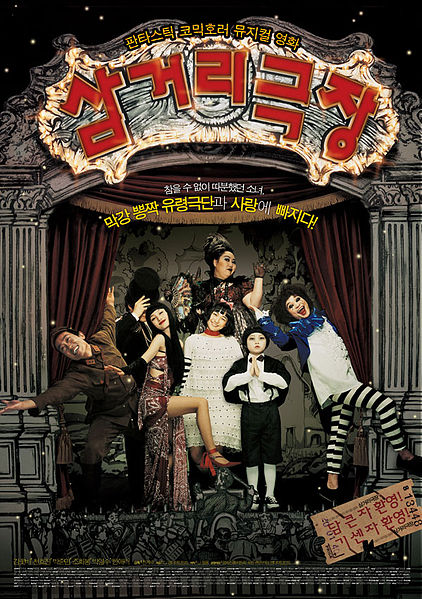
422px-Midnight_Ballad_for_Ghost_Theater_Poster

Midnight Ballad for Ghost Theater is a 2006 Korean film that is very hard to categorize. Let’s call it a musical comedy that utilizes horror themes.

It is hard to find, as it has never had an official American release; however, it is possible to order  a copy from Korea.

The plot revolves around Seong Sodan (played by Kkobbi Kim), a teen age girl who lives with her Grandmother. One night her grandmother leaves the house, saying she is going to the theater to watch a movie she starred in when she was Sodan’s age. Sodan tracks down the theater to find her grandmother, but no one has seen her. Interrupting a suicide attempt by the theater manager (played by Chun Ho-jin), she is given a job as ticket seller, where she hopes that eventually her grandmother will show up.

It turns out that the theater is haunted by the ghosts of the rest of the theater troop who made the film with Sodan’s grandmother. They are doomed to haunt the theater until they can see that film, (“Minosoo: The Bull-headed Man”) once again.

At first frightened of the ghosts, Sodan befriends them and they help her come out of her shell. She, in turn, tries to find out what happened to the film, both to help her new friends and hopefully to find her grandmother. All the while, the theater manager tries to dissuade her (between his botched suicide attempts), saying that finding the film will lead to tragedy.

If I had to sum up this movie in one word, it would be charming.

The overall feel of the film has a clear Tim Burton-esque feel to it, mainly of his earlier films like BeetleJuice. There is a sense of “what the hell am I watching”, while still enjoying the ghost’s antics.

The characters of the ghosts themselves are immediately engaging. First we have Elisa (played by Joon-myeon Park), who claims to be a Joseon Dynasty Princess. She is loud, bossy, and often threatens to execute the others.

Next is Hiroshi (played by Jo Hie-Bong), a Japanese solider who was stationed in Korea where he fell in love. All of his dialogue is in Japanese, but he can understand Korean, and still be understood by the other ghosts.

Wanda (played by Ae-Ri Han) is a former Kisaeng (similar to a Geisha), who fell out of favor after giving birth to a client’s child. She is bulimic and obsessively counts her hair.

Finally you have Mosquito (played by Yeong-su Park), who is made-up like a demented Harlequin (or let’s be honest, the Crow). Of all the ghosts, he is the only one who is given no back story.

The theater manager is clearly involved with the ghosts’ story, and as Sodan unravels the mystery of the missing film, she learns more of what that is.

All the back story of the ghosts, the manager, and the film itself are done though song. And those songs can be very catchy, even for someone who does not speak Korean.

If you are looking for deep character analysis, Midnight Ballad for Ghost Theater is not the movie you want. It is a light hearted romp, with no real concern for character development.

I give Midnight Ballad for Ghost Theater a B-. It is appealing, and fans of films like BeetleJuice or The Rocky Horror Picture Show will enjoy it and possibly want to own it. Non-fans will likely be left lukewarm by its surreal nature and lack of character depth.

Fanboy News Network Episode 9

Fanboy logo

Fanboy News Network Episode 9

A look at the buzz surrounding the release of the Guardians of the Galaxy trailer.

The fan reaction to the announced casting for the new Fantastic Four film.

Casting news for the Constantine and Gotham pilots.

Coverage on the recent drop in overall comic book sales.

Site Update: Schedule Changes

schedule

It dawned on me that I need to reassess how I have been allocating my time.

I recently took the time to look at all the projects I am working on right now:


  1. Writing a weekly column for this site.
  2. Producing a weekly podcast.
  3. Developing a comedy audio series.
  4. Voice Acting for various audio dramas.
  5. Helping a friend edit an audio book they are producing.
  6. Improving my studio space for audio recording.

And this is all on top of working a full time job, where we are in the middle of a major project.

Some of the above projects are more time intensive than others. The voice acting isn’t a major drain on my time overall, but usually will eat an entire day when I am needed. The audio book editing is a one off deal that will eventually end.

But I have been seeing signs that I need to readjust some things, as I am missing some weeks on Podcast production, and I often have to rush through my columns to get them to my editor on time. The thing that is getting sacrificed most often is the work on my own audio series, which is the project I really want to get going. But I also don’t really want to drop anything.

So I think I have come up with a compromise that will allow me to keep things going, without causing my work suffer.

There will still be weekly updates every Saturday, but for the time being I will be alternating between columns and podcasts. This will allow me to not have to worry about rushing through writing the columns, and give me more time to prep the podcasts. It should also allow me more time to work on the audio series scripts, in order to have something concert ready for the people I am working with on it.

And, hopefully, I will have some new exciting announcements for you in the near future.

The Hole Behind Midnight Episode 7

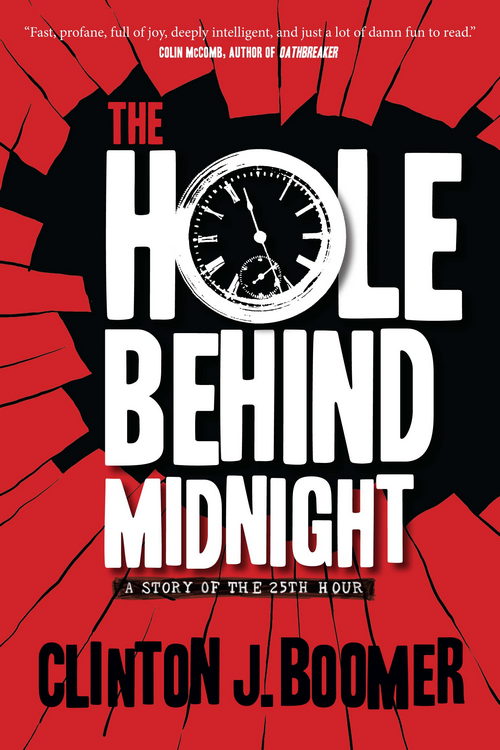
hole behind midnight cover sketches.inddAnd here is Episode 7 of the Hole Behind Midnight audio book podcast. Book by Clinton J Boomer. Audiobook produced by Julie Hoverson

Have you ever wanted to see an annoying hipster get the crap beaten out of him by very short person of East Indian descent? Well too bad, this is a podcast, you only get to hear it happen.

The Hole Behind Midnight is meant for Mature Audiences and contains strong language and adult themes. There we warned you.

You can find the main sight for the podcast here.

And is you are interested in the book, you can find details here.

And hey, I’m somewhere in this episode. Good times.

American Horror Story: Coven and the subversion of typecasting

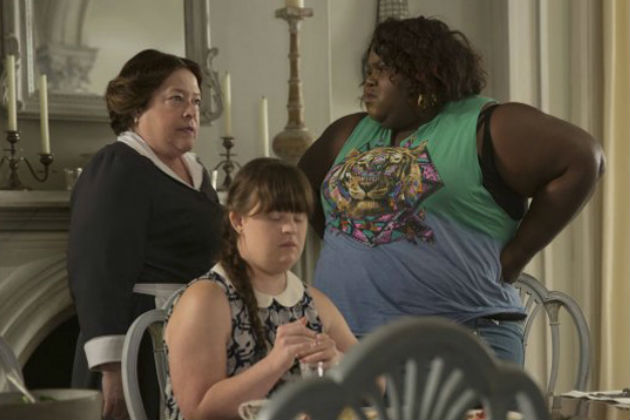
American-Horror-Story-Coven-The-ReplacementsHaving watched the season finale of American Horror Story: Coven, I wanted to take this opportunity to write about something that I think it did very well:  the unexpected way it treated a couple of its characters.

Specifically I was struck by the characters of Nan, played by Jamie Brewer, and Queenie, played by Gabourey Sidibe.

For background Jamie Brewer is an actress who has Down Syndrome. She is very active in theater and is a member of the Groundlings. She is also a disabled rights activist. In the first season of American Horror Story: Murder House, she played the daughter of Jessica Lange’s character. It was a fairly clichéd portrayal of someone with Down Syndrome. She was childlike, mistreated, and had trouble understanding the world fully. It wasn’t a gross portrayal, it just didn’t stand out as anything ground breaking.

Brewer did not appear in season two Asylum; her return in Coven however was fantastic. Her character, Nan, is a clairvoyant and thus often knows more about what is going on than most of the other characters. She is also clearly very intelligent and in a rivalry to attract the attention of a handsome neighbor, and wins over the pretty starlet in the coven by treating him as a person rather than a prize.

Nan is a complete subversion of what we would expect from a character who has all the physical signs of Down Syndrome. In fact I can’t think of a single point in the season where there is any dialog making any reference to her having the condition, although I could not check back with the earliest ones thanks to how On Demand works. I think it shows Brewer’s strength as an actress, combined with the strength of the writing, that by the third episode we aren’t thinking of her as anything other than a member of the coven, and a strong one at that.

New to the show this season was Gabourey Sidibe as Queenie. Sidibe is best known for the movie Precious, for which she received an Oscar nomination. Obviously her weight is going to be something that people notice. As an actress she has had to face a lot of fat shaming in her career, and has always dealt with it like a champ.

As Queenie, there are hints of that in the first episode, again from the pretty starlet who joins the coven. She quickly deals with that and, honestly, it is never brought up again. Instead, the issue of her race is more central, which is logical as race relations are a central theme of the season and her character’s arc includes her being torn between the largely white coven, and the lure of joining the exclusively black voodoo group. She also is the primary character to deal with a racist slave owner, brought to modern times, whom she attempts to teach the error of her ways.

Queenie, like Nan, is given agency, and the writers avoid going for any of the easy routes they could have, given her appearance.

American Horror Story: Coven had an overabundance of excellent actresses and it would have been easy to overlook the gems they had in Brewer and Sidibe, or gone the easy route of playing on the stereotypes of their appearances. That it didn’t, and gave both actresses plenty of opportunity to shine, is a testament to the entire production and makes me eager to see what season 4 has in store for us.

Fanboy News Network Episode 8

Fanboy logo

Fanboy News Network Episode 8

In this episode:

Mike Marts jumps ship from DC to Marvel

Disney announces a live action Chip N Dale movie.

The Superman/Batman movie gets it’s Lex Luthor and a new executive producer.

A look at the season finale of American Horror Story: Coven.

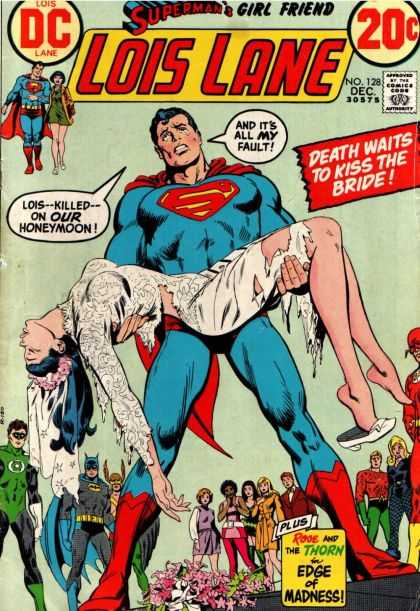
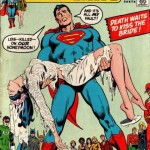
DC Comics’ War on Marriage

savelois

Back in 1980, I was struck by what (at the time) was an outrageous idea.

Why can’t Superman marry Lois Lane?

The heart of the idea was that I was getting old enough to realize that the status quo in comics was stifling, and that not letting the characters advance in any way kept the stories from being anything more than kids’ stuff. Sure you were beginning to see books with better story telling come out, like the Chris Claremont run on X-Men, and the Wolfman/Perez relaunch of the Teen Titans.  But, overall, the really big name comic characters seemed stuck in a story stasis that seemed to be permanent.

Of course this wasn’t an absolute. DC had characters like The Flash, the Atom, and the Elongated Man who all eventually got married. This also did not count characters like Hawkman and Hawkgirl, who started out married.

Also if you look at Marvel you had Reed Richards and Sue Storm who got married early in the run of the Fantastic Four, as well as Ant Man and the Wasp.  But, like DC, it seemed that some characters( like Spider-Man) were destined for bachelorhood.

Then 1985 happened. With the release of The Dark Knight returns and Watchmen, comics suddenly became a venue for serious writing.  You also had Crisis on Infinite Earths, which tore down the old DC continuity and relaunched the entire line. It took characters (like Superman) and, even though it restarted them, allowed for stories that advanced and felt like they really could grow dynamically.

From the time of the relaunch, you saw Clark Kent and Lois Lane go through all the stages of their relationship – from dating, to his revealing his identity to her, engagement, and eventually they did get married. Over all, it felt organic and was some very good story telling. It also opened up some fantastic storytelling, with the marriage being treated like one you see in real life if one of the partners is a fireman, or solider. But not all was peaches and cream; from the beginning of the relationship, there were detractors. Some were fans who did not like the break from the status quo. They wanted the Superman who appeared in the cartoons, or the Donner movies, and could not accept a more humanized version of the characters. Others were writers who chafed at having to write about a Superman who was in a healthy relationship, as they felt it constrained them.

In spite of this, for over a decade, you had Clark Kent and Lois Lane as a happily married couple, and they were not the only ones. Wally West (Barry Allen’s successor as the Flash) married his girlfriend Linda Park. Over at Marvel you even had Spider-Man get married.

This was also paired with the growing idea of the legacy character. You had Wally West pick up the mantle of the Flash after the death of Barry Allen. You even had Dick Grayson become Batman after the apparent death of Bruce Wayne. So you had comic characters growing and their stories progressing. It was a great time to be a comic book reader.

We should have known it wouldn’t last.

The first signs of this problem were over at Marvel, when it was decided to retcon away Spider-Man’s marriage. I’ve written about the specifics of that in the past, so I won’t rehash here. The basics however were that Editor-In-Chief, Joe Quesada, wanted Spider-Man reset to how he was written during his own youth.

Sure it annoyed fans, but it was nothing compared to what was going to happen over at DC.

The first sign of trouble was Emerald Dawn, which saw the return of Hal Jordan as Green Lantern. This was written by Geoff Johns, one of DC’s best writers. The problem wasn’t apparent at first, as Johns did not discard Kyle Rayner, Hal’s successor, but instead made all of the Green Lanterns a team.

The real signs of trouble came with Flash: Rebirth, which was the story that brought Barry Allen back to life, again written by Johns. While not stripping Wally West of his status as the Flash, he was quietly moved to the background.

DC was rolling back the status of its Universe to the Silver Age status quo.

There was another troubling factor going on at the time; there were writers complaining that writing for a married Superman, or even Flash was too hard.

This brings us to Flashpoint and the launch of the New 52.

I’ve written a lot about what a mess this entire relaunch was, but one of the biggest factors contributing to this was the loss of all the character progress that had occurred. I may not have minded so much if it had been a clean and total reboot, but the half assed way it was handled (with not really rebooting Batman and Green Lantern) made it more glaring that characters like Superman and the Flash lost all their development from all of those previous stories.

And, of course, a large part of this was that not only were Superman and The Flash not married any more, but that their wives (Lois and Iris) were not even their love interests. In fact, the writers went out of their way to make it clear that they were in no way romantically linked.

The part that really annoyed me was when DC Co-Publisher Jim Lee said that, once they got rid of Superman’s marriage, the stories just flowed. This implies that the marriage was the problem, and not his lack of skill as a writer.

But at least the DC Universe had some married couples, like Animal Man and Aquaman. Or so we thought.

This all came to a boil during what is now known here as the DC PR Meltdown; the week when DC could not keep their foot out of their mouth.

This is when everyone learned that DC editorial had pulled the carpet out from under the long planned wedding of Batwoman, and her girlfriend Maggie. When accused of shying away from a same-sex marriage, DC Co-Publisher Dan Didio said it was not the same-sex part that they were against, but the marriage part. He said that they did not want any of their characters married, because the level of sacrifice needed to be a hero did not allow for that kind of happy ending. He fundamentally said that no DC hero should be married. So, basically, a ban on marriage. He seems to believe all heroes need to be miserable. I am left to wonder how these clearly hack writers ended up in charge of the DC Universe. Of course, I am sure the answer is politics, but I digress.

Another DC editor was challenged, after these comments were made, to reconcile these comments with a character like Aquaman, who is successfully married to Mera. The editor said Aquaman and Mera were not married. It was pointed out that Aquaman, king of Atlantis, regularly refers to Mera as his queen. The editor countered that just because she is his queen, it does not mean they are married. This came as a surprise to series writer Geoff Johns, who had never been told they were not married.

The only hero allowed to be married was Animal Man, and that is because his marriage (and its slow collapse) was central to the story. Not that it was a happy marriage, which is why I guess it was ok.

So why has DC come out against marriage?

I reject Didio’s argument that heroes don’t get that kind of happy ending. First off, marriage is not an ending, it is a commitment to the most important person in your life. Also, it is not easy and comes with many challenges that can lead to dramatic moments. Superman and Flash writers were able to find those for all the years each characters was married.

I also reject the argument that marriage limits storylines. A good writer would not have that problem. The issue is that a lot of the current writers (and more importantly right now editors) are caught up in their childhood power fantasies, and their heroes being married doesn’t fit into them.

As for the overall all ban, I have a suspicion that it was an attempt to cover a bad decision. I think someone in the editorial chain did not want there to be a same-sex marriage. When the story broke big, I think Didio’s statement against marriage was an attempt to hold off the accusations of being homophobic, chiefly due to how ridiculous the claim that Aquaman and Mera are not married is.

In the end, I think the whole war on marriage that DC has declared is just another sign of how badly there needs to be a change in the editorial structure. Time will tell, I suppose.
 

Fanboy News Network Episode 7

Fanboy logo

“Welcome to Night Vale Live”

Jeff covers recent news stories including

The postponement of Superman/Batman

A special guest star to Agents of S.H.I.E.L.D.

The cancelation of Teen Titians.

He than talks about having attended the kick of date off the Welcome to Night Vale Live West Coast Tour.

The sad tale of This is Vegas

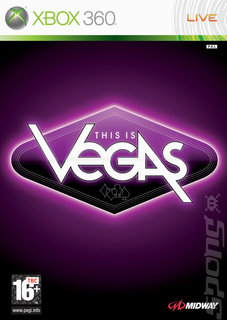
_-This-is-Vegas-Xbox-360-_While mostly a table top gamer, I also play video games. It’s an even split between PC and console. One thing I rarely do is jump right on the latest release. I will usually wait for it to be out for a bit and see what the reviews are. However, I will still follow the development of games that sound interesting.

In 2009, I was following the development of a game that I thought looked interesting and was looking forward to see what it would be like. The game was This is Vegas. It was originally being produced by Midway Games, and was going to be a platformer in the style of Grand Theft Auto.

Notice my liberal use of the past tense?

Although not well known to the gaming public at large, This is Vegas is known in the industry as one of the biggest money wasters ever to not result in a title being released.

So let’s take a look at what could have been, why it wasn’t, and what it says about the state of the game industry.

The premise of the game is that you are a street-smart hustler born and raised in Las Vegas. You learn that a large multimedia company is planning to buy up all the casinos (and other property on the strip), with the goal of turning the town into a watered down family friendly version of itself. You set off on a series of missions with the goal of opposing this change, and making sure that Vegas can still live up to its nickname of Sin City.

The game would have broken its missions down into four categories: gambling, fighting, driving, and partying. All we will ever really know about how the game mechanics would have worked is from this video that goes into the partying mechanic. At the time it looked interesting as it was clear the idea was to give the players the feel of being the cool guys, who knows how to party in Vegas.

This was, of course, no guarantee of the game being a hit, but it looked like it would at least have had a shot.

So why did the game get canned?

Development on the game started in 2006. It was meant to be competition for games like the Grand Theft Auto series. This was an era when a successful game could be made for $3 million. It was also a time when game budgets started to rise. At the time, there were warnings about game development costs raising as high as $15 million. It turns out that this was a low estimate.

Midway Games went through bankruptcy in 2009, and that June sold all of their assets (including This is Vegas) to Warner Bros Interactive Entertainment. At the time of the sale, Midway had already put $43 million into production of the game. In August of 2010, Warner announced that the game was being canceled. While there are no precise figures available, it is estimated that about $50 million had been spent on development, and with at least nine additional months needed, it was not cost effective to continue. In the end, it was felt that this title would not be a big enough seller to justify the continuing cost.

What does this say about the industry?

Even though video games bring in several billion dollars a year, you will always hear that, after a game has been shipped, a company will lay off the developers. The truth behind this is that while games may be very successful, the high production costs cut into the bottom line.

Just as an example, it is estimated that the development cost for Grand Theft Auto V was $137 million USD, and $265 million USD once you included marketing. Of course this is a game that broke $1 billion USD in sales within three days of release, so you can argue that the cost was justified. But what if it had been a flop?

Really, it is the same story as any other form of media. The big companies are going to want guaranteed hits before making an investment, leaving innovation to the smaller companies who are going to take risks and probably need a crowd source campaign to fund the project.

And what about This is Vegas. Well since Duke Nukem Forever finally released, This is Vegas now holds the dubious distinction of being the game industry’s most expensive piece of vaporware.  Somehow, I don’t foresee anyone making any effort to rescue it from this fate.


Horror Review: A hit and a miss

Today we have our first article by Fanboy News Network Horror Correspondent Jennifer Lovely:

The success:
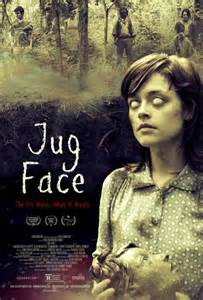
jugfaceJug Face grabbed me the moment the credits began; it pulled me in with its primitive
folk art animation that foreshadows the movie’s undertone, style and people. I was
really struck by the charisma of each the primary characters. The sympathy that you
feel for the young woman in the lead role is surprisingly strong in a short period
of time. You immediately gather that she has wits and is struggling to survive as
well as she can in a backward, cultish community. Having grown up in a small town in
a rural area, you see a lot of that tough, almost emotionless, rearing. It was very
familiar to me and I understood how emotionally starved she was, and why she would
make choices that would normally horrify or disgust me. Both the special effects and
sound effects are well used and give a sense of foreboding, while never being
intrusive or overplayed. This is a girl who fights and you root for her to make her
escape, yet when the end comes you understand the choices she makes.

The movie that fails:
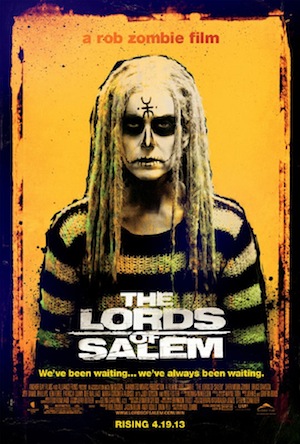
the-lords-of-salem-posterThe Lords of Salem is not completely without merit. The quality of the supporting
cast is amazing. Whenever Bruce Davison, Patricia Quinn, Judy Geeson, or Dee Wallace
enter the scene you are captivated. Every time I was about to turn it off, they
reappeared. The atmosphere and set combine to create their own character that
completely stands out. But, as soon as the story starts, things go downhill.
Firstly, the ominous sound use is ham-fisted and oppressive, it starts well but is
so overused it becomes cliché. Next, everything around Sheri’s character shows how
strong and what an individual she is (female DJ in a male dominated industry,
especially metal), but when she is on the screen you never see any of what they hint
at. The fact that she is attending NA and fighting to stay sober speaks of strength,
to me, in theory. But after five days of what is, in essence, bad dreams she starts
using again. It’s like she is only the shadow of an amazing person, walking around,
but that you never really get to see on screen. She is empty and defeated, and that
isn’t interesting. I don’t place the blame completely on Sheri Moon Zombie’s
shoulders. All she did is work within the story, and it was the story that failed
her. Because the moment things start going badly, it’s just a descent into oblivion
with no effort on the character’s part for any other outcome. And I just don’t find
that interesting.