About Caliban

I'm a long time fan of science fiction, fantasy, comic books, gaming and the like. Also a former Employee of Wizards of the Coast, and one of the founding members of the Camarilla Fan organization. Follow me on Twitter @caliban1227.

The Hermes and Hekate Road Show Episode 1


The Hermes and Hekate Road Show is an audio drama created by Ray Snyder and Genevieve Williams. It depicts the adventures of the Greek Gods Hermes and Hekate as the go on a road trip to find the stolen objects of the Gods, and perhaps save the world.

Each episode will be post here as they come out.

Click here for Episode 1 where the duo travel across the border to retrieve the first lost object and find an additional mystery.

DC Entertainment: Trouble at the top.

DCI’m not happy with how much I have been writing about not being happy with DC Entertainment lately.  It seems every time I decide to cover them, I am complaining about something new. Just recently, we got the news that Warner Bros. has scrapped the latest Justice League movie script. The latest Wonder Woman series pilot in the same boat. On top of that, the new “52” strategy is beginning to come apart at the seams. And yet I still cover them more than Marvel, because I am still more invested in their characters, which probably makes me an outlier amongst comic book geeks.

So what is going on? Why are things such a mess over there? Didn’t Warner Bros. set up DC Entertainment in order to avoid things like this? Shouldn’t DC Entertainment President Diane Nelson be able to get a handle on this?

Given how things seem to be set up, the answers are in no way simple.

First off, we have Diane Nelson. Diane’s area of expertise is brand management. She was brought on to help build the various intellectual properties that make up DC Comics. That alone is a tall order. But the truth is that while she is a great brand guru, she is not a film maker or a comic publisher, so her influence in these areas is limited at best. To that you need to add the way Warner Bros. is organized, with the film division having the most power. This has allowed the film division to make executive mandates that have led to many of the issues I have written about in the past. Reports are that Nelson is extremely frustrated with the current state of affairs, but has no real way to deal with it.

If all of this is true, then we have to wonder who is calling the shots specifically. The answer to that is probably a lot more complicated than it seems.

Nelson is a brand manager; in fact, she was the person in charge of the Harry Potter franchise at Warner Bros. When that film series was winding down, she was put in charge of the newly formed DC entertainment. This is probably not a coincidence. With the end of the enormously successful Potter franchise looming, WB clearly wanted something to replace it. Since Marvel Studios was having unprecedented success with their films, it was natural for WB to move on the DC brands. These were established characters with a huge preexisting fan base. So Nelson moves over to DC to shepherd those brands, and has the aid of Geoff Johns, one of DC’s top writers, who moves in to the role of Chief Creative Officer. So far everything looks great. The first movie out of the gate was Green Lantern.

I’ve written before about the problems with that movie. In a nut shell, it was a paint-by-numbers summer blockbuster that took no chances and left the audience less than thrilled, because they had seen it before. To add insult to injury, less than a month separated it from Captain
America
, a film that did take chances and was for more original. So the script was clearly the main culprit. Well, the thing about that is that two of the main writers of the script were Greg Berlanti and Marc Guggenheim. Right now, they have a TV series they created on the air. That series is Arrow, based on DC comics’ hero Green Arrow, a show that I was convinced would never work. Right now Arrow is the best superhero show that has been on TV in well over a decade, based largely on the strength of the writing.

So how do these two writers so clearly screw up with horrible writing on a DC property that should have succeeded, and take another concept that should have tanked, and make it pure gold based on stellar writing? Did they take intense writing classes in the interim?  I doubt it. Were they writing lazier for Green Lantern since they knew it would have big action scenes and special effects vs. the small TV budget of Arrow? Maybe, but I think there is a simpler answer. Green Lantern was DC’s first real attempt to go up against the Marvel movies, so there was a lot riding on it at the studio. My best guess is that there was a lot of executive influence on the script. Arrow, on the other hand, was an adaptation of a lesser tier hero on the CW. If it tanked, it was no big loss, so I suspect Berlanti and Guggenheim were given a lot of free reign.  If so, I hope that lasts now that Arrow has been renewed for a second season.  The point is that from what we know, the Warner Bros. structure is set up so that producers and movie executives hold the real power, and can dictate what they want.

So why did this not affect Marvel over at Disney? Simply put, Marvel was already rolling when Disney bought them. But even then, it could have been a mess, except that someone had the good sense to put Kevin Feige in charge of Marvel Studios. Feige has a clear vision of how the Marvel movies should work, and makes sure that the producers and directors he hires understand this vision and adhere to it. This has allowed the cohesive development of the Marvel Cinematic Universe.  When Disney bought Marvel, they took the view of “It’s working so let’s not mess with it.” This led them to having the highest grossing movie of last year and the third highest of all time.

DC has to contend with what I like to call “too many mad scientists and not enough hunchbacks.” And worst is that WB has seen the success that Marvel has, and wants to compete with it. Unfortunately, they have not found a good counterpart to Feige, so there is no cohesive vision. This should be Nelson, but again, this is not where her strengths appear to lay; and from all appearances she is not being given that kind of authority.

And then we have the comic books themselves. This should be a no-brainer. The books are the source of the intellectual properties, and are something that should be working well. But right now is a hard time for the industry as a whole, and DC Comics does not appear to be doing well.

Right now sales look fairly good, but there is a bit of smoke and mirrors with that. When the “New 52” launched in 2011 it was a great sales boost. However, for many books, those sales did not last. When a book hit a low selling point, usually dropping below 18,000 orders a month, it would be canceled, and a new series would take its place. Since you had new series, they would have good initial sales. This would boost the line and keep numbers up. The problem is that the new series are not doing well and have quicker reader drop off, so you have a higher number of books struggling.

Add to this a problem we have discussed before – DC editorial is not on top of its game. You have frequent creative team shifts and last-minute mandated changes, leading to poor issues. You also have mandated story elements designed to garner wide spread attention, like the Superman/Wonder Woman romance, which is not well-written since there was no organic growth to it.

If that weren’t enough there is increasing perception that Dan DiDio, Co-Publisher with Jim Lee, is a poor leader and hostile towards fans, and you have a recipe for a bad work environment.

So how does Warner Bros. solve this? As I see it either Diane Nelson has to take the bull by the horns and make the needed changes, or WB has to find their own version of Kevin Feige and give them the authority to do what needs to be done to right the ship. This means someone has to be able to tell the movie division “no.”

I’ll be honest, I don’t see that happening any time soon. But one can hope.

Universal Horror: Spanish Dracula Review


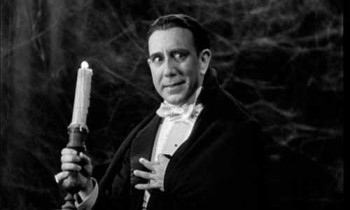
Carlos Villarias as Dracula

As I stated in my review of Dracula, a common practice in Hollywood during the early days of talking pictures was to film a second version of a movie using the same sets and shooting script in a foreign language. At the time, dubbing was not a very refined art, and many considered it cheating anyway. Sadly, most of these films have been lost as they were considered secondary to the English language version and less effort was made to preserve them.

Fortunately, one of the few to survive was the Spanish language version of Dracula.

There is no real reason to go over a synopsis of the film’s plot. It is identical to the English language version that I reviewed last week. Go back and reread that if needed, I’ll wait.

A lot of interest has been given to this version over the years, as many people feel it is in fact superior to the Bela Lugosi classic. Are they right? Let’s find out.

The film was directed by George Melford who was already famous for having directed Rudolph Valentino’s silent classic The Sheik. Working for Universal, Melford directed four Spanish language films. Melford did not speak a word of Spanish and had to use a translator.

Melford also had a competitive streak, at least when it came to Tod Browning and Dracula. Melford and his crew would come in at night after Browning’s crew had wrapped for the day. He would get to look at the dailies with the idea that he would mimic what was shot. Instead Melford decided he could do better and chose to try and improve on what Browning had shot.

Watching this version can be jarring if you are familiar with the English version. Many scenes are identical in look and feel. However, as the movie progresses differences start to become more apparent.

First of all is the pacing. The Spanish version is much better paced, shrugging off the theatrical roots of the material. While the camera work is not as fluid at times as the English version, it makes up for it with grander sweeps and faster movement. There are two scenes in the Browning version that go on a bit long, a battle of wills between Dracula and Van Helsing, and a vampiric seduction of Harker by Mina. Melford improves the pacing by having them happen simultaneously and cutting between them.

Another very clear change is on the close ups of Dracula. In the Browning version, it is always a tight shot of his face with a band of light across his eyes. In Melford’s version, it is a tight close up of just the eyes, or a tight close up of the face and then a jump cut to the close up of the eyes.

Of course we also have to look at the performances by the actors as this is the chief difference between the two.

Carlos Villarias plays Dracula. Of the cast he was the only one allowed to look at the dailies, as the studio wanted him to mimic Lugosi. While there are similarities between the two performances, they are still very different.  Villarias plays Dracula more energetically than Lugosi did, and due to less stringent standards for the Spanish audience was able to make the seductive elements of the character more overt. In many ways this is a better performance than Lugosi’s. However, the difference is that Villarias did not have the same commanding presence as Lugosi. So while it might be a better performance technically, it was in no way matching the iconic one given by Lugosi.

Pablo Alvarez Rubio played Renfield. Here I feel that while his performance was equal to Dwight Frye’s, it was different. Manic Frye was menacing, where Rubio was just over-the-top raving. Calm Frye was sympathetic where Rubio became sinister.

Eduardo Arozamena played Van Helsing. Here I feel the performance was flatter compared to the one given by Edward Von Sloan.

The biggest difference was in the female lead. When I reviewed the other version I glossed over the performance of Helen Chandler as Mina. I felt it was just serviceable and did not really stand out. In the Spanish version, Lupita Tovar played the renamed Eva. Her performance was much more dynamic, especially when under Dracula’s thrall. It should be noted that Chandler’s career did not extend beyond the 1930s, whereas Tovar was working through the mid-1940s.

So in the end, I can say that yes, the Spanish version of Dracula is the superior film. Its biggest down fall is that it lacks the iconic performance of Lugosi.

I give it a grade of B-

Hopefully it will not take a year to get back to the Universal Horror movies again. When we do return, we will look at the final member of the Horror trinity, the Wolf Man.

Universal Horror: Dracula Review


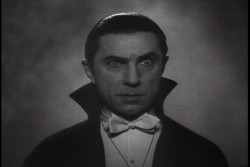
Bela Lugosi as Dracula

After nearly a year, I am getting back to my review of Universal Horror classics. So let’s take a look at the 1931 Universal production of Dracula.

Before I get into the review I want to cover an interesting topic.

In the early days of talking pictures, it was common for a version of a Hollywood production to have a second version of a film made using the same script and sets, but in another language. Apparently overdubbing was not that refined a process and many considered it cheating anyway.

Dracula had a Spanish version that was filmed at night using the same script and sets. Most of these foreign versions have been lost, but Dracula is one of the few they were able to recover.

I have watched both. While this review is going to just cover the English language version, next time I will go over the Spanish version, as it deserves its own article.

On to the review.

For years Universal had wanted to make Dracula. Specifically Carl Laemmle Jr., son of Universal founder Carl Laemmle Sr., wanted to make Dracula. Originally as a silent picture with Lon Chaney as the Count. Several factors delayed production. First was just securing the rights, as author Bram Stoker’s widow had sued the producers of Nosferatu for not having secured the rights, and won. Then there was Chaney himself who developed throat cancer and died. Finally, you had the great depression which resulted in the movie having a smaller budget. Originally Laemmle had envisioned a grand film on the scale of the Hunchback of Notre Dame that adhered very closely to Stoker’s novel. Now he needed to tone it down and eventually the film more closely adhered to the Broadway stage version.

The other challenge was casting. Most of the cast came together fairly quickly, except for Dracula himself. At first, Conrad Veidt was considered. He had been successful in horror, both as the somnambulist Cesare in The Cabinet of Dr Caligari, and lead in The Man who Laughed. Unfortuantely Veidt had to return to Europe, so he was out.

Interestingly, the studio was against casting Bela Lugosi, who had played the part to much acclaim on Broadway. Lugosi himself lobbied hard for the part and with choices dwindling the studio decided to give him a shot.

The director of the film was Tod Browning. Browning was a successful silent film director, including having worked on the vampire-themed London After Midnight with Lon Chaney.

The story begins in Transylvania with a real estate agent named Renfield traveling to meet with Count Dracula to finalize his purchase of Carfax Abby in London. After securing the deal, Renfield is put under Dracula’s thrall. Traveling to London, Renfield is institutionalized at the Sanitarium next to the Abby run by Dr. Seward.  The count begins preying on London, with focus on Seward’s daughter Mina. Seward brings in Dr. Van Helsing to look into a rash of anemic deaths which Van Helsing correct deduces are the result of vampire attacks.  Van Helsing suspects the Count, and once confirmed, begins a hunt for the vampire’s resting place in order to bring an end to the menace.

Let’s take a look at what does not work.

Pacing is the number one problem with the film. You can clearly tell this is an adaptation of a play, as that is how it is paced. One striking thing is that the Count almost never moves quickly, preferring to stalk towards his victims.

I suspect that Browning added to this as he was used to silent film and did not know how to adapt the pacing for the inclusion of sound. One reason this is glaring is the lack of background music. This was not the fault of the production, however. In the first few years of sound, the only time music was added was if there were musicians visible. It was assumed that music would confuse the audience as to where it was coming from.

Another oddity is some of the editing choices. There are several times when Dracula is onscreen that it will cut to a close up of his face with a band of light across his eyes. This is an iconic image and I would think perhaps creepy to a 1931 audience, but seems jarring by today’s standards.

On the cast, sadly many of them just don’t stand out. Several of the cast did not have long careers in Hollywood, and you can see why here.

However, moving on to more positive aspects, there were some exceptional performances; otherwise I doubt this movie would have become a classic.

It almost should go without saying that Bela Lugosi dominates the film. He brings, charm, mystery, and menace to the role.

Next to Lugosi is Dwight Frye as Renfield. He starts the movie as a normal, if dull businessman, but as soon as he is under Dracula’s control he is a raving madman. Frye makes him stand out as a man who wants to be free, but cannot escape Dracula’s grasp.

Edward Van Sloan as Van Helsing rounds out the good performances as Van Helsing, conveying the man’s will and determination to defeat the vampire.

Of interest is that later in 1931 both Frye and Van Sloan would be part of the cast of Frankenstein, securing their place in horror history.

Another bright spot for Dracula was cinematography. The film was lucky to have gotten ground breaking cinematographer Karl Freund. Thanks to his work, the film looks wonderful even today, and many of his tracking shots were considered ground breaking at the time.

Finally we have to look at the legacy of this movie. It solidified the image of the vampire in the public mind. Even today, the stereotype of the vampire is based on Lugosi’s performance.  It also gave us the image of the haunted castle, with crumbling walls and cobwebs. The tropes associated with a vampire’s minion were set in stone by Frye, just like he would later in the year with the mad scientist’s hunchbacked assistant. And the vampire hunter in the mold of Van Helsing would also be influenced by this film.

It is also worth noting that Dracula was the first film made in Hollywood that was overtly supernatural. Until then all Hollywood horror involved the deformed, the deranged, or someone using trickery. Europe had some supernatural elements in their films, but this was the first for Hollywood, and opened the doors for all horror that would follow.

In the end you can see why this made such an impact.

However, I do not feel that it has held up as well as Frankenstein.


I give the 1931 Dracula a grade of C+.


Join us next week when we see how well the Spanish language version holds up.


Star Wars Solo Films


Han Solo

Disney has wasted no time and getting to work with the Star Wars Franchise now that they have acquired the rights to it. On the heels of the announcement that JJ Abrahams will be directing Star Wars Episode VII it was announced that they would also be producing standalone films set in the Star Wars Universe looking at individual characters. The official announcement includes the news that the first set of these will be movies focusing on Yoda, Boba Fett, and Han Solo.

A first glance a lot of fans are going “this is a blatant money grab”, and on some level this is almost certainly true. After all the goal of most Disney movies is to make money. The unspoken addition to this is “a side movie will suck.”

On that last one I disagree, at least with it being a given. After all they are really just following a business plan that is already working for them. Specifically this looks a lot like the model of the Marvel Cinematic Universe.

With Marvel you have individual movies; Captain America, Iron Man 1 and 2, Thor, and The Incredible Hulk. These movies all lead to one big movie; The Avengers.  Now they are back to the individual films; Iron Man 3, Thor 2, Captain America 2, and Guardians of the Galaxy, collectively known as Phase 2.  These will lead to Avengers 2. After that Disney and Marvel have already announced Ant Man and Dr. Strange for Phase 3 with a rumored Hulk movie.

The advantage of this model is that the individual movies can introduce back story and concepts that feed into the big movie freeing that movie to pick up and run with them.

With as extensive a universe as Star Wars has built over the last several years there is no reason that the some plan could not work for them as well.

And don’t tell me there is no interest in explorer more of that universe. Just look at how well the novels, comic books, and video games have sold, and many of them do not even feature the original main characters.

Right off the top of my head I can see a lot of opportunity in this idea.  You make movies featuring characters like Yoda, Boba Fett, and maybe some newer characters like Han and Leia’s kids, or members of the new Jedi order. You set the stage for episode VII by dropping clues in these individual films. The buzz builds until you have the release of Episode VII. On top of that you can almost certainly lure a lot of top talent to these side films, especially with the knowledge that they do not have the pressue of making the flagship film.

Is it a gamble? Sure, but at least it is following an already proven model.  And I for one would be really excited to see where they take it.

This does raise another question. What other franchises could benefit from this way of making a film series? Imagine if they had done this with League of Extraordinary Gentlemen.

Gender change in a remake


Superman’s New Pal?

It’s geek debate time again.

This debate is brought to us by the upcoming Superman movie Man of Steel. And it is the time-honored debate of how they are altering a character. In this case the alteration appears to be happing to none other than Superman’s pal Jimmy Olsen, and the change looks like a big one. Fans were noting that nowhere in the cast list was there any mention of anyone playing Jimmy. This is surprising as there has never been a live action Superman project that did not include Jimmy. He even appeared in the Supergirl movie. Minor character Emil Hamilton is appearing in the Man of Steel, so where is Jimmy?

Then someone reading the IMDB listing for the movie noticed that there is a character named Jenny Olsen, listed to be played by actress Rebecca Buller. Jimmy and Jenny are similar names. So the speculation has started that Jenny is a gender swapped Jimmy. And of course the moment that fans got wind of the story the debates began.

This is not the first variation on traditional casting that Man of Steel has done. Laurence Fishburne was announced early on as playing Perry White, thus changing the character’s ethnicity.  There was not really any noise about that casting, however this could be due to the fact that Fishburne is an actor well known to geek fans and well respected, so news of his casting was more along the lines of “they got a good actor to play Perry”. Buller on the other hand is a newcomer, having only one other acting credit listed on IMDB.

I think we as a society are at a point where altering ethnicity of a character is not as big of a deal. It happened to Pete Ross on Smallville and no one made any noise about it. Gender swapping tends to get more reaction as it can more significantly alter a character’s interactions with other characters. Also there can be a certain amount of homophobia or misogyny. Fans not dealing well due to identifying with the original character and not dealing well with the change or the old “a girl can’t do that.”

The best example of this is Battlestar Galactica.  In the original series, one of the main characters was Lt. Starbuck, a dashing rogue who was clearly meant to remind viewers of Han Solo from Star Wars. Starbuck was a ladies man, gambler, and smoked cigars. For the late ‘70s these traits all said lovable rascal. He was the best friend of our designated hero, Captain Apollo. Like Han Solo, Starbuck became the fan favorite character.

Also in the main cast was Lt. Boomer, who was a more level-headed counterpart. He was the intellectual, and more likely to act as a voice of reason.

In the 2003 remake both Starbuck and Boomer were recast as females. Most of the attention when this was announced was focused on the change to Starbuck. As the fan favorite character from the original show, the fans were outraged that such a change was taking place. All through the run of the remake there were some fans who could not get past this, even though once people saw the show it was clear that all the characters were different from their 70s counterparts.

In reality a lot of Starbucks characteristics were retained in the switch. Both were the best pilot in the fleet, both were brash and challenged authority, both gambled, drank, and smoked, and both really liked sex. In fact outside of the gender change, the biggest difference in the characters was that male Starbuck was always well groomed and female Starbuck was always looking rough and tumble, and that change probably has more to do with era difference than gender.  They were both the fans’ favorite character on the show.

In the end, changing Starbuck’s gender opened up storytelling possibilities that the writers took full advantage of.

Honestly, with the number of changes they did with the character of Boomer, the gender change is almost incidental.

Although it does seem that Grace Park, the actress who played Boomer, seems to have a habit of this. On her current show, the remake of Hawaii 5-0, her character is Kono, who was a male character on the original show. In this case the change was clearly an attempt to get a female character in the show where the original was exclusively male.

Another recent example comes from the CBS show Elementary, which is their answer to the British show Sherlock, placing Sherlock Holmes in a modern day setting. On Elementary, Holmes’ partner John Watson has been recast as Joan Watson and is being played by Lucy Liu. In this case, there are several elements of the traditional Holmes story that have been altered, and ultimately the gender change seems more in line with the Hawaii 5-0 one of providing more cast diversity than anything about the character.

So where does that leave us with poor Jenny Olsen? At this point it is hard to tell, since everything we know about this situation is based purely on speculation. Is she just an attempt to put another female on the cast, like Watson or Kono, or is she a way to open up story avenues not available with Jimmy, like Starbuck?

I for one will be interested to find out. Until then I will keep my nerd rage and knee jerk reaction in check.


Jack Parsons, The Rocket Magician


Jackparsons

Back in 2000 Alan Moore, one of the most celebrated comic authors of all time, was writing an anthology book for DC comics called Tomorrow Tales. Tomorrow Tales was homage to the old pulp comics. One of the characters in the book was Cobweb, a femme fatal who fought crime in as sexy a way as possible. One of Moore’s stories for Cobweb was blocked by DC due to subject matter, adding to Moore’s dissatisfaction with DC and ultimate departure from mainstream publishers all together.The subject matter of the story is what fascinated me when I learned of it. It was based on real events and had Cobweb meeting L. Ron Hubbard and Jack Parsons. Now I of course had heard of Hubbard before, but Parsons was new to me. It turns out that his was a fascinating story, and I can see why Moore wanted to tell it.

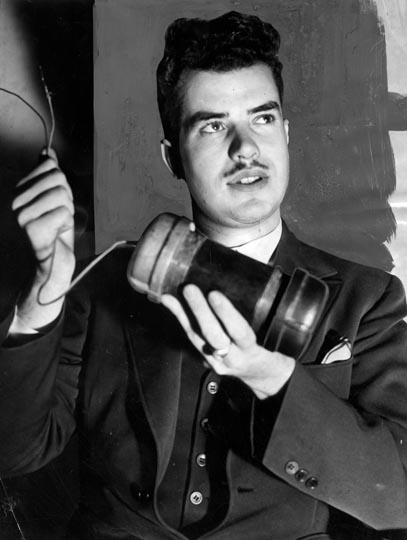
John Whiteside “Jack” Parsons, was born Marvel Whiteside Parsons in 1914, and I think we can guess why he may have wanted to change his name when he got the chance.

There are two very compelling and yet very different aspects to Jack Parsons life that make him worth learning about. To our sensibilities they would even seem at odds, though the fact that they weren’t to him adds to his mystique.

Parsons was born rich, but was abandoned by his father as a teenager. He attended college but did not get a degree. However I suspect that he gave up on college because it bored him. You see Parsons was a scientific genius. Despite having no degree he still managed to join the Guggenheim Aeronautical Laboratory of the California Institute of Technology.  The man was literally a self-made rocket scientist.  He conducted some of the earliest rocket research in the U.S. and pioneered solid fuel which led directly to the invention of JATO.  In 1936 he was one of the co-founders of the Jet Propulsion Laboratory, and his research is credited with making modern rocketry possible.  There are many who feel that Parsons should be credited as the father of modern rocketry.

But that was and still is unlikely due to the other interesting side of Parsons. Not only was he one of the leading scientists of his time, he was also one of America’s leading occultists.

Parsons had become involved in the Ordo Templi Orienties or OTO and thus a follower of Thelema, the religion founded by Aleister Crowley.  Parsons eventually rose to lead the major American Branch of the O.T.O. known as the Agape Lodge. Parsons saw no difference between his work as a scientist and his practices as a ceremonial magician. In fact he was known to invoke the god Pan prior to rocket tests.

Parsons was also interested in science fiction, so would seek out writers as well as other artist. He ran a boarding house nicknamed “The Parsonage” that had artists, writers, and scientists as lodgers.

One of these writers was L. Ron Hubbard.

And here is where things get very interesting.

But first just a little more background.

Parsons had been married to Helen Northrup. Helen’s half-sister Sarah Northrup came to live with them which led to her having an affair with Parsons.  This did not go over well with Helen and she eventually left Parsons. While they never married Parsons and Sara continued their relationship.

Now back to Hubbard.

Hubbard and Parsons got on well and began practicing magic together. They agreed to attempt a major magical ritual, known as the Babalon Working. Now while I am familiar with some practices of the OTO I certainly do not know any of the specifics of this working and I honestly do not trust accounts I have found as I suspect there is a lot of sensationalism in them. What I do know is that the purpose of the Babalon Working was to produce a Moonchild, a being that will usher in a new age for mankind. Part of the working was intended to find a third member of the working, known as the Scarlet Woman. They eventually found Marjorie Cameron, who did join them in the ritual. Not much is known of what happened of course, but Parsons declared it a success.

This event is what Alan Moore was interested in depicting. Knowing Moore he either wanted to cast Cobweb as the Scarlet Woman, or I suspect more likely claim she was the Moonchild. Either way it was the fact that the story involved Hubbard that made DC get cold feet and pull the story.

After the Babalon Working Parson, Hubbard, and Sarah Northrup formed a business partnership to run a boat company, with Parsons putting up the majority of the money to get it started. This of course is where things went south.  Earlier Aleister Crowley had warned Parsons that he considered Hubbard a con man and that he would find a way to make off with Parsons’ money and Sarah. This is basically what happened. Hubbard and Sarah went off to buy the first boat, but instead of bringing it back, made off with it and the rest of the company’s funds.

Parsons, borrowing a page from the Tempest, claims to have summoned a storm that forced them back to port. Then he went the more mundane route of suing to get his money back. He recovered much of the money, but Hubbard got to keep the boat.

Hubbard ended up marrying Northrup and Parsons married Cameron.

Parsons did manage to bounce back from all this. He continued working as both a scientist and magician. He also wrote several essays on magical practices and philosophy. His writings were collected in a book called Freedom is a Two-Edged sword.

In 1952 Parsons died in an explosion in his home laboratory. There are people who will claim it was a suicide, or a magical ritual gone wrong, but honestly it was in all likelihood exactly what it looked like, an accident during a scientific experiment.

Parsons would continue to be an influence well beyond his death. Werner Von Braun was quoted as saying the Parsons was the true father of American rocketry.

The same can be said of his work as an occultist. His writings and philosophies still influence practitioners today

Writers have found him endlessly fascinating. Moore actually did use him in an issue of Promethea. Other authors would also use him because of his mixing of science and magic.

I think if Parsons Life shows anything it is that it is possible to have these very diverse sides and still make it all work. And if that doesn’t speak to us geeks, I don’t know what will.


The history of the replacement superhero

Superior_spider_man_by_ryanstegman

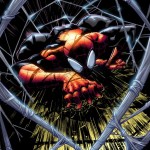
Once again we find ourselves in a place where a classic superhero has been replaced. In this case if you haven’t been following the comic book news, Peter Parker is no longer Spider-Man.  A new Spider-Man has taken his place. According to Marvel this is a permanent change and will be the status quo going forward.

The general consensus amongst fans is that this status quo will last about a year before Parker is returned to his role as the Wall Crawler.

But why do we just assume that this is a temporary situation. Let’s take a look at the history of major characters being replaced in superhero comics.

First I suppose we need to establish that we are talking about characters from the silver age. There was of course the update of most of DC Comic’s characters in the 60s. That was treated as a new launch and not meant to be old characters being replaced.

The first question is why replace the character at all. The answer is naturally to open up new story possibilities. When a character has been in place for so long several of their characteristics are set in stone. If a writer wants to go beyond those a good way is to have someone new in the role.  There is also the idea of character growth.

One of the most successful replacements of a character ever was the Flash. In 1986 during Crisis on Infinite Earths, Barry Allen gave his life to save the universe. At the end of the series his nephew and sidekick Wally West, Kid Flash adopted the Flash identity. Over the next 25 years Wally West was the Flash. The series often examined Wally attempting to live up to the legacy of Barry, and how other heroes and villains who knew Barry reacted to him in the role. Wally went from overcompensating, to insecure, to finally stepping up to the role of one of the leading heroes in the DC universe.  Wally ultimately stood as a member of the Justice League alongside many of other major heroes. Most media projects of the time used the Wally West version of the Flash; most notably the Justice League animated series.  There is an entire generation of comic fans for whom Wally is and has always been the Flash. But the tale of Wally West does ultimately lend itself to why we fans are cynical about the permanency of a replacement hero.

In the 2008 series Final Crisis Barry Allen returned from the dead. The following year saw the release of the Flash Reborn where Barry officially stepped into the role of the Flash again. Wally was still around at this time, but he no longer had his own book, and after a while just faded from the title. With the New 52 relaunch Wally is now not only missing from any title, but is one of the characters that writers are forbidden to use. Again he is the Flash that a lot of fans are familiar with, but since the powers that be at DC want Barry to be unique Wally has been wiped from the universe.

Another example was one we touched on last year when we talked about the old speculation boom and how it went bust, the Death of Superman storyline and specifically the Reign of the Supermen. Here you had the very publicly touted death of comics’ most iconic character.  It was certainly a headline grabber. For all the grief it gets as a sales ploy and the storyline that started the implosion of the speculator market and subsequent shrinking of the industry, it was a well written story. It was broken into four acts, the death, the aftermath, the rise of the replacement supermen, and the return of Superman. Clearly the whole story was planned from the beginning, and savoy comic fans knew this. At shops and comic shows everyone speculated how each stage would be handled. No one expected any of the replacements to permanently take over. Well no one who actually followed the books. As discussed before, speculators assumed this was a permanent change. Just look at the previous article for more on that. The replacements did of course continue on as characters in their own right and Steel and Superboy went on to be important parts of the DCU.

Around the same time you had the Batman books doing a similar idea with Knightfall. Again a new character was brought in as the replacement Batman. This one had less impact on the DCU, with only the new villain Bane having any impact going forward.

In both those cases the fact that new characters were introduced as the replacements was a big clue that it these were only storylines and not lasting changes.

More recently Marvel and DC did some very similar stories that went another route on the replacement angle. Like the Flash these were stories where the former sidekick took over for their fallen mentor.

At Marvel it was Captain America’s sidekick Bucky taking over the role went Cap was killed at the end of the Civil War Story. At DC it was Dick Grayson taking on the role of Batman following Bruce Wayne’s death at the end of Final Crisis.

In both cases some very good writing came out of these stories. Ed Brubaker wrote Captain America at this time and you had a slightly darker Cap with Bucky under the mask and espionage was a bigger part of the story. At DC you had Grant Morrison writing Batman and Robin and knocking it out of the park with a more light-hearted Batman and a darker Robin, who was Bruce’s son Damian.

In both cases about two years later both Steve and Bruce were proven to be alive, their deaths faked by means of time travel. Upon their return both Steve and Bruce left their successors in their roles and the pursued other goals. Eventually both heroes returned to their roles and the sidekicks resumed their previous identities.

When these storylines started fans were already cynical enough about main heroes being replaced that there were betting pools on how soon the originals would return.

These are hardly the only cases I could site on this subject, but the trajectory is basically the same. Eventually the old superhero resumes his role.

As of this writing I can only think of one exception to this, Marvel comics’ cosmic hero Captain Marvel. Marvel’s death occurred in the first ever Marvel graphic novel. Over the years his death has stuck. The problem has been keeping a consistent successor.

Originally the new Captain Marvel was an unrelated heroine with unrelated powers who took up the name. Next up was Marvel’s son taking up his father’s role. Most recently we have the heroine Ms. Marvel, who was connected to the original, taking on the title of Captain. This last is being well received so we will see how it goes.

Which brings us back to Spider-man.

This is actually the second time that Peter has been replaced. In the 90s you had the first attempt to have an unmarried Spider-man thanks to the clone saga, where it was revealed that Peter was just a clone of the original Spidey and the person we thought was the clone, Ben Reilly, was really the original. Peter decided to retire, and Ben took over as Spider-Man.

Fans hated this twist and it was quickly dropped and revealed to all be a plot by the Green Goblin and Peter was the original after all.

Now thanks to a body swap we have Doctor Octopus inhabiting Peter’s body. Doc’s body with
Peter in it has died, so Doc as Peter is the new Spider-Man.

I won’t get into the details, but the first issue of the new Superior Spider-Man on the last page already has the seed of how the original Peter will return. So the question is, how long will it take.

Anyone want to set up a pool.


X-Factor Review

XFACTOR200

During The Holidays one of my favorite comic writers Peter David suffered a stroke. I was already planning on taking a look at his title X-Factor, and so I am now moving that up to the top of my list.

I of course wish Peter a speedy and full recovery and am glad that he is getting good care. More on that later.

In the last couple of years I have not been very happy with Marvel comics. I know it seems that I complain more about DC these days, but that is because I have been following more of their books. At one point I reduced my Marvel comics to one title. Why this is I will go over at another time. As for the one title I kept, well it of course is Peter David’s X-Factor.

Before we get into the current run however let’s take a look at the history of this title.

As should be obvious from the X in the title, this is technical a book in the X-Men franchise. In fact when the title was originally launched in 1986 the team line up was the original five X-Men: Cyclops, Angel, Iceman, Beast, and Jean Grey. The theme of the book was that the original X-Men were posing as a group of mutant-hunters that people could hire to deal with perceived mutant threats. In reality they were rescuing said mutants to secretly help and train theme. So basically they were pretending to be the mutant equivalent of the Ghostbusters.

This line-up lasted for five years. After a shakeup of the X-Books the team was given a new roster and recast as a government sanctioned mutant team. This was also the first time that Peter David took on the writing chores and the book was known for its more lighthearted tone compared to the rest of the mutant titles. David only stayed on the book for two years. The series kept going, keeping the government team angle until it was canceled in 1998.

The series languished for a few years, with just a four issue miniseries of no real note being produced.

In 2005 Peter David brought the series back, spinning it out of a mini-series he wrote featuring Jamie Madrox, the Multiple Man as a private Detective. The New X-Factor was a private investigation firm specializing in cases involving super humans. The cast was drawn largely from David’s 90s run on the title giving him characters he was familiar with and also allowing him to build on plotlines he had started back then.

So what is it about this title that has kept my attention when I had basically dropped the rest of the company’s line?  Let’s take a look.

First off as should be no surprise is David’s writing. His specialty is characterization. The book has the same lighthearted tone that he established in the 90s and has become the books trademark. This is not to say it doesn’t get serious at times, or deal with heavy issue, but it is not weighted down with unnecessary angst like so many x-books, or really Marvel books in general. In the end like all good fiction you care about the characters and thus get engaged in their stories.

And there is the next point, the cast of characters. The unlikely lead of the series is the previously mentioned Jamie Madrox. Jamie was never really a main character before. His superpower is to make duplicates of himself. Other than being able to create an over whelming force or be the ultimate multitasker writers didn’t have much use for him. But then David did something great, he thought like a fanboy and asked what the other angles of self-duplication are.  He hit on the idea of Jamie sending dupes out into the world to learn a variety of skills. Once a dupe mastered a new skill he would come back and be absorbed back into Jamie prime. This meant Jamie was able to master multiple skills in a relatively short amount of time. David followed that up by asking what the downside was. The answer there was that as people grow they change. Each dupe grew in different, sometimes conflicting ways. The result was a Jamie that was himself not sure who he was, and new dupes having varying personalities upon creation.

That is the kind of thinking that goes into this book.

Another great thing about the case is its diversity. They include a gay couple, one of whom is a genetically engineered warrior from another dimension, and the other a mutant who had, until very recently, lost his powers. You also have an ex-girlfriend of Jamie’s who can shatter walls with her voice, a powerful mutant named M, who is Muslim, but really they periodically have to remind us of this as it is not her defining characteristic, an alien troll, and a large super strong mutant whose hero name is Strong Guy, because he doesn’t feel like being pretentious. And best of all is Layla Miller, a young girl whose power was first presented as “I know stuff.” This meant she knew what was going to happened before it did and could take small actions to affect the outcome. Her code name is butterfly. It later turned out that the knowledge was implanted via time travel and her real power was to bring the dead back to life, but that she needed to conceal that power for a long time. A trip to the future led to her coming back as an adult and ultimately marrying Madrox.

Yeah, that story does get a bit soap operaish, but the dialog is usually more witty than melodramatic.

A really big factor for me liking this book is that while it clearly is in the Marvel Universe it is telling its own story. As such none of the big crossover events that Marvel constantly throws at us really have much effect on the book or the ongoing story. So as someone who doesn’t follow those events I do not feel like I am missing important parts of the story.

Well usually.

When Rictor, the depowered mutant, got his powers back it actually happened in a crossover. It was the one time I did fell that Marvel editorial had done wrong by Peter David. However Peter did manage to write the follow-up to that event in a way that covered the gap and was highly entertaining.

When they do interact with the Marvel Universe it often feels correct as they are usually being hired to investigate something, such as when the children of Reed and Sue Richards hired them to find their mother.

There is one other detail that I have always enjoyed on the book. The first page of every issue has a listing of the team’s roster, a recap of the recent story line, and then a quick update about Peter David and his family. Yes, the writer will keep us updated about his family in the text of the comic. Try and tell me that is not cool.

Obviously the future of the book is currently up in the air due to Peter David’s health. Of course my hope is that he is able to recover and continue writing, or at the very least advise on the plot. A recent post from his wife on his website indicates that he is still working on the book from his hospital bed, and that it is helping keep his spirits up. No other announcement has been made about the future of the book yet.

One other note is that the David family, while having medical insurance, is facing some big medical co-pays. As such they are asking fans for help.  For more information on this please go here to visit their web site.

As a final recap X-Factor is my favorite Marvel title and Peter David my favorite writer working for them.

I gave the X-Factor Series a solid A grade.


The Gail Simone situation

gail_simone

Recently I have been writing about the issues DC Comics has been having with keeping its top talent. Previously it was the high profile departures of George Perez and Rob Liefeld. Both men left due to conflicts with the editorial staff. Then you had the resignation of Karen Berger as Executive Editor of the Vertigo imprint. In her case it may just be that she has done the job for twenty years and it is time for her to move on.

Now you can add the dismissal of Gail Simone to the list. This one more than any of the others is really setting of alarm bells amongst the fan base.

Unlike any of the others writers I mentioned, Simone was dismissed. Specifically she received an email from editor Brian Cunningham telling her that issue 16 would be her last issue of Batgirl. Since that was the only title she was currently working on this was basically her dismissal. Now of course she was rehired not two weeks later, but we will look at that and what it means in a bit.

There can be a lot of good reasons to dismiss a creator from a comic book, but none of the obvious ones are visible in this case. Batgirl is a strong seller compared to many DC books right now. In addition Simone has received critical praise for her run on the title. Another point in her favor is that she is a fan favorite author meaning a lot of people will pick up a book she is writing simply because she is the one writing it. Simone is also an advocate for DC and the new 52, promoting it heavily over social media and at conventions. Finally there is a PR factor; Simone is one of only three female creators currently working on DC titles. Since this is an area that DC has already received a great deal of criticism for, it is a risky move to remove the most high profile female creative talent they have.

So with so many positives in her favor what could have motivated DC to remove her? Right now we have no solid answer as DC has made no comment at all about either the dismissal, or the reinstatement. So we can only speculate as Simone herself has opted to take the high road.  On the dismissal she simply stated that she is disappointed to no longer be on the book, but made no comment about any other circumstance. On the reinstatement she just stated how happy she was to continue working on the title.

However if you look at this as part of a trend a picture does begin to emerge. Starting with the departures of Perez and Liefeld that I have commented on before, which both men cited conflicts with DC editors. Next you have stories of regular last minute changes to stories that have been turned in, with plot elements being added against the writers will. What we are hearing more and more of is editors dictating the stories that need to be written, making certain characters off limits, and making others mandatory. We also hear of editors getting into turf wars with each other. Finally we hear of writers being kept in the dark about plans for the characters they are writing, such as Simone not being told that Batgirl would be joining the Birds of Prey in their title.

I find Berger’s departure at this time interesting as well. She has been in charge of Vertigo for 20 years, and guided it during a period of amazing creativity.  Books that thrived under her tenure and guidance include Sandman, Fables, Preacher, Y the Last Man, The Invisibles, Swamp Thing, Hellblazer and Transmetropolitan. I’m sure there is a good chance that she just decided that 20 years was enough and it was time to step down. On the other hand, after so many years maybe she recognized something going on at the company that made stepping down now a good idea.  Trust me other companies would fall over themselves to hire her, and she would be in an excellent position to grab any talent leaving DC.

And talent leaving the ship is another sign of something wrong. In March Marvel has books coming out featuring creative talent that has been working strictly for DC up to now. That could be a group of creators simply expanding out, or it could be them getting set up elsewhere before it is too late.

But let’s get back to Gail Simone. There are certainly rumors going around about what happened, some based on the conjecture above. Basically the best guess right now was that Simone was not making the DC powers that be happy. She had her own ideas how she wanted the stories to go, and she wanted to push the envelope. She had been clear about wanting to introduce a transgender character to the Batgirl title. Also despite her hard work in promoting DC and the changes she is still one of the strongest advocates for better treatment of women in the industry, both as characters, and the flesh and blood ones working on the books. The best conjecture we can make is that one or more people higher up in the DC power structure decided they wanted her gone, and so that is what happened.

Was this a bad idea? Yes, it was an amazingly bad idea. This more than anything else shows that all is not well in the halls of DC comics. And even if they try to keep this lower profile with the fans, the talent is going to know what is going on. The worst case scenario for DC is that the really good creators jump ship, which will affect the quality of the books and ultimately sales. Add to that pressure from vocal fans about what DC is doing and it does not look good for their long term prospects.

I think that last part, the pressure from the fans, is what led to the decision to bring Gail back. Convention season is just around the corner. Fans have already been in an uproar about a lot of DC decisions. The public reaction to firing Gail Simone made all of that pale by comparison. I promise you that had she not been rehired that every panel at every convention would have asked what the hell is going on.

As a fan I sincerely hope I am wrong in these speculations. I grew up with DC comics and I want them to thrive.  But right now things I am seeing have me concerned. But I also have hope. The fact that fan outcry got Gail Simone rehired means we do have a voice. If we can use that to let DC know how we really feel about things maybe it will all work out.

I have a feeling the next couple of months will be telling.