 Click Here for episode 3
Hermes and Hekate get into a bar brawl that ends up with them having to explain themselves to a higher authority, and in return they get a better idea of what is really going on.
visit the shows main page here

Click Here for episode 3
Hermes and Hekate get into a bar brawl that ends up with them having to explain themselves to a higher authority, and in return they get a better idea of what is really going on.
visit the shows main page here
At this year’s Norwescon I managed to find myself an unexpected panelist. The subject of the panel was the creepypasta phenomena, with a focus on the Slender Man. Only one panelist was on time and she admitted that her knowledge of the subject was limited. As I had written on article on the Slender Man before, and did a lot of research, I offered up the history of the character. I remained on the panel even after one of the other panelists showed up 20 minutes later.
It dawned on me as we sat there that even though I had covered the subject of the Slender Man fairly well in this blog, I had not really touched on the other members of the creepypasta universe. So let’s take this time to do an overview of the wonderful and unnerving world of the creepypasta.
First what is a creepypasta? The term is derived from another bit of internet slang called copypasta, which refers to any text that is copied and pasted over and over again, such as kids with cancer collecting postcards, which is how many memes get started. A creepypasta in contrast is a story created on the internet that is meant to be disturbing, shocking, or outright scary. Go back and read my articles on urban legends, as these stories have similar properties and sometimes end up crossing the line by being presented as one. At the panel we agreed that basically a creepypasta is any ghost or horror story that originates on the internet and uses the internet itself as part of the storytelling medium, usually by becoming memes.
There doesn’t seem to be any hard rules about what makes a creepypasta. So let’s look at the more popular ones to get a feel for them. These are just going to be brief overviews.
Of course the granddaddy of them all is the Slender Man. I wrote about him before so I will refer you to that article for details. What I will add is that this character has gotten so popular and immersed in our culture that he is losing some of his bite. I regularly see people cosplaying as him at conventions. There are parodies now, including Splenderman. Add to that a number of movies either ripping off the story or using him outright, and I think the mystique of the characters is getting diminished.
Going beyond Slender Man, you have certain themes that a creepypasta can fall into. The first are characters that seem to be using the same basic motif of the Slender Man, that of the boogeyman, the character that comes at you when you are most vulnerable, when you sleep.
The creepypasta most like the Slender Man is the Rake. The Rake, just like the Slender Man, can be traced back to a specific thread on 4chan. Like most creepypasta creatures, the stories about the Rake and his behavior vary from telling to telling. In most versions the Rake it is a pale, bald, humanoid creature that has feral characteristics. Usually it will crawl into a person’s bedroom at night and sit on the foot of the bed. It will than whisper to the person, often telling terrible prophesies or in some cases threats. These victims almost always meet a grim fate.
Another popular creepypasta boogeyman is Jeff the Killer. It’s a little harder to track down where Jeff came from, but odds are good he is another 4chan creation. Jeff is more in the vein of a slasher killer from the 80s. He is a pale, noseless man, with his mouth slashed into a permanent smile and his eyelids removed. He will creep into your room at night with a knife. If you wake up while he is there he will say “Go to Sleep” and if you scream he will attack. An entire origin for Jeff has been written which can be found here.
Moving on from the boogeyman, we next have the creepypasta where either something online or on a computer is itself dangerous. Again, Slender Man has aspects of this. Another one that does this is known as smile.jpeg, or smile dog. It is a picture of a dog with a sinister human-like smile. If you see the picture you will supposedly have epileptic fits in your sleep and dream of the dog telling you to “spread the word.” The only way to be free is to share the picture. This creepypasta has more than one image attributed to it, with one popular image sharing characteristics with Jeff the Killer.
Another is Lavender Town Syndrome. It tells of the original version of the game Pokémon Red and Green which introduced a supposed Pokémon graveyard called Lavender Town. In the creepypasta version, the original music for that area drove over 100 children to kill themselves and so the game had to be patched.
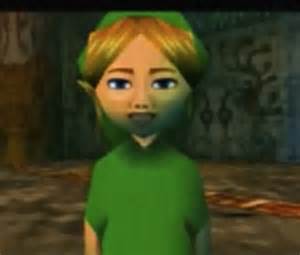
But the most well-known of this type of creepypasta is known as Ben Drowned, or the Majora’s Mask Creepypasta. This one tells of a YouTube user relaying his experiences playing The Legend of Zelda: Majora’s mask where he comes to believe the cartridge is haunted by a ghost named Ben. The story gets very involved, and I would prefer to not give too many spoilers. I would suggest going here to check out the YouTube videos. I would suggest not doing this at any time you would like to avoid being creeped out, as they are particularly well done.
This barely scratches the surface of the whole creepypasta phenomena. If you are interested in pursuing more I would suggest checking out a few sites. One of the best resources is the site Television Tropes and Idioms. Its creepypasta section has a good listing of the most well-known, and can give you a good list to start. There is also creepypasta.com, a site dedicated to collecting creepypasta stories. Finally I would suggest the site Know your Meme if you are just looking for a good summation of the various creepypastas, though it is best used if you already know the name of the creepypasta you want to look up.
The final conclusion we came to at the panel was that mankind has had ghost stories as long as we have been able to tell stories, and anytime a new medium is developed, people will find a way to use it to tell new ones. The creepypasta is the ghost story of the message board and the YouTube account. And as long as people like to be scared and creeped out, there will be people ready to provide these tales for them.
Dragon*Con Logo
Originally I had no intention of writing about the situation surrounding Dragon*Con and the calls to boycott it. Not that they weren’t interesting or relevant to geek culture, but others had made the same points I would and I didn’t feel I had anything new to add.
So what changed?
Recently I have been reading a lot of exchanges online about Dragon*Con and the boycott effort. The problem is that in a lot of those exchanges I have seen a lot of emotion and a casual disregard of facts. As a one-time journalism major and a fan of the @willMcAvoyACN twitter account I feel strongly that facts are important. So let us take some time here and now to look at the facts as I have been able to learn them.
Dragon*Con is a for-profit convention founded in 1987 in Atlanta, Georgia. Originally a science fiction convention, it has grown to be more of a multi-genre convention, embracing almost all aspects of geek culture. It currently boasts an attendance of approximately 52,000.
One of the convention’s founders is a man named Ed Kramer. Besides working with the convention, Kramer edited several books working with such well-known authors as Neil Gaiman, Nancy A. Collins, and James O’Barr.
In 2000, Kramer was arrested and charged with molesting three teenage boys. Due to a combination of legal actions and health issues he has yet to face trial on those charges. After the charges were made, Kramer was removed from Dragon*Con’s board and is no longer involved in running the convention; however, he retains his shares in the company. In 2009, Kramer posted a bond that allowed him travel privileges in order to attend his health needs and visit his mother. While on one of these trips in 2011, Kramer was caught in a motel room with a 14 year old boy leading to his arrest and further charges. He fought extradition back to Georgia to face the original charges. Last January that extradition went through and he is back in custody in Georgia.
The call for a boycott of Dragon*Con comes from Kramer’s status as a shareholder. Kramer owns 31% of Dragon*Con shares, which means he is entitled to profits from the convention. In 2011 those shares netted him $150,000.
The call to boycott Dragon*Con was started in January by Nancy A. Collins. Her contention is that Dragon*Con has not done enough to remove Kramer as a shareholder, and that they should dissolve the corporation and reform under another name.
In February Dragon*Con made a public statement on the matter. It pointed out that Kramer has no hand in running the convention at all since 2000. It also points out that efforts have been made to buy out his shares of the convention but Kramer responded by suing them. They also explored the option of dissolving the corporation and reforming, but that was not a possibility right now. Follow up on that last point revealed that under Georgia law, a corporation cannot voluntarily dissolve as long as there are pending legal disputes, so Kramer’s lawsuits prevent that option. Some have suggested trying to force Kramer to sell his shares, but that cannot take place until after he has been convicted, since he is presumed innocent under U.S. law until then.
So those are the facts of the case. Where does that leave us?
Based on all the above facts, there are only three factors that will prevent Kramer from receiving funds from Dragon*Con:
1: He is finally convicted, at which point new legal avenues open up for the convention
2: He dies. The man does have health issues, including the need for an oxygen tank. One of the major reasons he has not faced trial yet is the contention by his lawyers that he is not healthy enough to sit through a lengthy trial. Based on that, It’s not farfetched to presume that he does not have that long to live.
3: Dragon*Con folds. Let’s face it, if the convention dies, that would prevent Kramer from receiving any more funds from it.
This leaves us with some of the back-and-forth debate that has being going on between those in favor of the boycott and those against.
The major point that those in favor of the boycott make is that denying money to the convention ultimately denies money to Kramer. This is a straight forward point, and can’t be argued with.
The counter that is made is that a financial loss to Dragon*Con can have a ripple effect on several people, including other employees of the convention, the vendors that depend on Dragon*Con as a major source of their annual income, and local businesses like the hotels and restaurants in the area.
Also on the anti-boycott side is the claim that despite the boycott, Dragon*Con is so big that it will still turn a profit.
The counter to this is that even if that is true, the boycotters can take comfort in knowing that their money did not go to this, and thus did not support Kramer.
There have been some suggestions that the current organizers of the convention just abandon Dragon*Con and start a new competing convention.
This is a really tricky one because it looks good on paper, but falls apart in reality.
Basically it would require creating a new convention from scratch, with no access to any of Dragon*Con’s assets. They would not have the advantage of the Dragon*Con brand name, and they would need to negotiate new contracts with new convention sites. They could not use the old sites, as they have multi-year contracts with Dragon*Con.
Is it doable? Yes, of course it is.
Is it something they are likely to do? No, because the hassle would be enormous, and there would likely be new rounds of lawsuits, not only from Kramer, but most likely the hotels and other venues they have multi-year contracts with.
In the end this is not the black-and-white issue that everyone wishes it was. Every person touched by this situation is going to need to do what their conscience directs them to do.
All I ask is that when deciding what your take on it is, you keep in mind the facts.
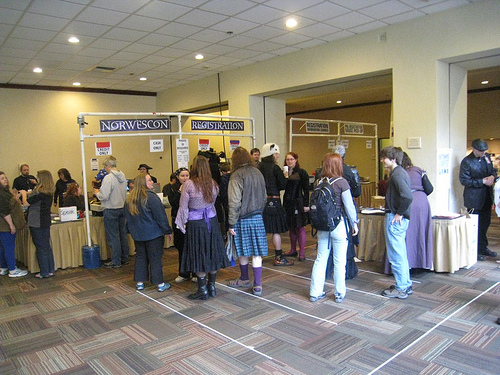
Convention Registration line
I first encountered the term SMOF in the late eighties. I was just getting involved with actually helping run conventions and people would through the term around. Being inquisitive, I asked what a SMOF was. Based on the initial reaction I got from people you would have thought I had asked the Colonel what the elven herbs and spices were. Eventually someone took pity on me and explained that the term stood for Secret Masters Of Fandom. Basically it was a term for the elder statesmen of the convention scene. There were no real criteria for becoming a SMOF, it was basically something that was bestowed on someone based on longevity, activity, and how well-known you were in the community.
Had I not taken a decade long break from conventions I would probably be a SMOF myself.
But what does a SMOF actually do?
That can vary quite a bit. Many of them are convention organizers, so they are the people that provide the meeting ground for other fans. Others are people who were convention organizers but have stepped down, or are just very active members of the community that have been around for years. SMOFs tend to take on the role of advisers, or at least commentators on the goings-on at conventions.
So really what they do is advise, or in some cases kibitz. And recent years have really facilitated this with the advent of mailing lists and message boards.
In some cases this can be useful. These are people who have been around the block in regards to the community. On the other hand, they can be a pain in the butt, as they have been doing it forever and that can make some of them very resistant to change.
An example of this occurred recently when one convention, Norwescon, made a change to its registration process by introducing a new computerized system that would scan barcodes on printed receipts. A group on the SMOF mailing list got very vocal against this system. They did not just object to the barcode scanning; they felt that convention registration should not even use computers, since conventions were able to run registration for years and years before the advent of personal computers.
At the same time this group of SMOFs were complaining that Norwescon was not a real fannish convention because it covered “Non-Fannish” subjects such as podcasting, gaming, and film making, and ignored the “real fannish” subject of fanzines.
So clearly these SMOFs were not happy that time has marched on and fandom has evolved.
To be fair, there were other members on the SMOF list that were defending Norwescon, and saying that change is not bad.
I think it is important to remember that with a group as loosely defined as SMOFs, you cannot paint them all with the same brush. But like any group, it is the loudest members that come to define it, and for the SMOFs it is the complainers.
And this is unfortunate, because in the end most SMOFs are going to be the best resource the community can hope for. They are the people who have been in the trenches the longest. They have made the mistakes and learned from them. And those that are afraid of change are not the majority.
The trick is making sure that their knowledge is passed down to the next generation in a useful way. The best SMOFs know that bitching on the sidelines is not the way to do it. Staying engaged with the community is.
At Norwescon, there was one guy I know to be a SMOF. He has been involved with the running of Norwescon as long as I can remember, which means at least 30 years. These days he has to use a walker. But he is also still involved with the convention. When a forum was being held about a major change to the convention’s policy, he spoke up and his statement carried both the weight of his experience and the acknowledgement that a new way was needed.
This is SMOFing at it’s best.
So there you have it, the good and the ill of SMOFs. We as a community are fortunate that the good comes out on top.
Once agai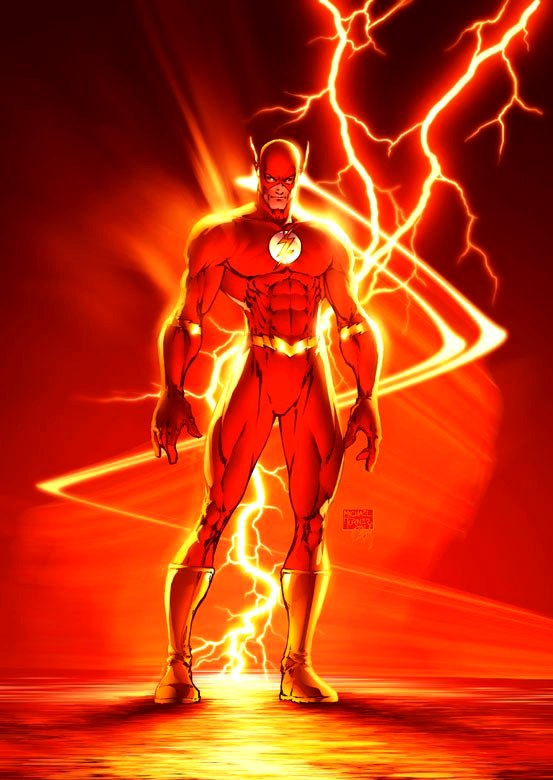 n we are being bombarded by news about the nonsense surrounding the DC Comics “New 52”, both storyline-wise and the many issues with the creative staff, and dropping sales. I, like many comic fans, find myself musing about how it could be fixed. If you think the New 52 is great and does not need fixing, you might want to skip this, you aren’t going to like it very much.
If I lived in an alternate universe where I found myself able to mandate a fix to the New 52, how would I go about it? The answer lay in the very story that set the whole mess in motion in the first place: Flashpoint.
At the end of Flashpoint, Barry Allen, the Flash, has to correct a broken timeline. A mysterious figure called Pandora influences the Flash to merge the DCU timeline with the Vertigo and Wildstorm timelines to strengthen it against an oncoming threat. The merged timelines created the New 52 universe.
For the purposes of our fix let’s assume that either Pandora was wrong, or better yet, she is the oncoming threat and the merger was step one of her plan.
And no one remembers the old timeline, so there is no way to oppose her. Or is there?
The storyline in my imagined “fix” would start with a mysterious figure observing events of the New 52, much the same way Pandora appeared in the background of all the New 52 first issues. This goes on for a couple of months. Eventually the figure reveals himself as Wally West, who succeeded Barry Allen as the Flash during the period that Barry was dead.
Wally, along with prominent DC characters Donna Troy, Stephanie Brown, and Cassandra Cain were not included in the New 52 timeline. They have been exiled to a limbo outside of the timeline. After months of effort, Wally was able to use his connection to the speed force to enter the new timeline.
Wally has spent time observing the New 52 timeline to figure out what has happened. Piecing together what has happened, Wally sets a plan in motion to fix the timeline and save the world. This would be the sequel to Flashpoint.
Wally would recruit a team including Barry, Superman, and Booster Gold. They would be opposed by Pandora, who would recruit her own team to fight them by convincing them that Wally is the threat they have to fight.
The tide would be tipped by Batman, who was not as affected by the timeline change due to his own time travel misadventures caused by Final Crisis.
The result would be the separation of the three timelines (mostly) and the return of the proper DCU timeline. Some elements of the New 52 timeline would be retained, either because they would have happened anyway, or just as echoes of the merger.
This would give fans back the lost characters they have missed so much, and could be used as a jump point of more storylines, especially if Pandora survives the event as well. The event would be notable as a major crossover that does not try to prove how edgy it is by killing off a major character.
So what do you think? Would this work? If not, what are your ideas?
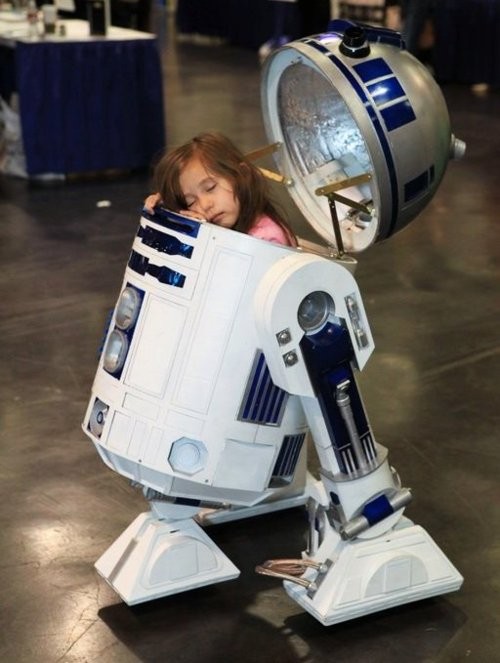
I recently saw such an amazing example of parenting done right that I feel the need to share it here.
I was hanging out at my regular comic shop, The Dreaming Comics and Games, in Seattle’s University District. Usually, I will end up hanging out for a few hours when I show up. On this particular Sunday it was slow in the store, so I was chatting away with Cory, the store manager. We always sit in a way that Cory can see the front door and greet people as they enter.
A woman walked in who neither of us recognized. As is usual, Cory welcomed her to the store and asked if she needed anything.
“Do you have any King Geedry figures?” she asked.
Cory paused, so I spoke up.
“Do you mean King Ghidorah, the three headed monster?”
“Maybe,” she responded. “My daughter has gotten into Godzilla. She’s outside. I wanted to check out the store before I brought her in.”
Now this mother had picked the exact right store. Aron, the store’s owner and my former roommate, is such a fan and expert on the Japanese Kaiju genre that conventions have brought him in to lead panels on the subject. So of course his store is going to have Kaiju figures.
Learning this, the woman went to get her daughter. Actually she brought in three, but it was the oldest who I would put at about nine or ten years old, that was the Godzilla fan. I happened to know that there was a deluxe King Ghidorah figure in the back part of the store. That and the fact that I am actually more of a Kaiju fan than Cory led me to help him during the family’s stay in the store.
The girl ended up exploring the store and pointing out all the Godzilla and Kaiju figures in the store, even noting that the Rodan figure behind the counter was Fire Rodan. Clearly she was a true fan.
Her mother told me that since the girl got into Godzilla, she had started sculpting figures, and had made a Rodan figure. I told her how I loved that fandom can lead to such creative outlets.
The young lady ended up spending about 20 minutes in the store with her mother. The younger siblings got bored and waited in the car and the mother would periodically check on them. In the end our young fan bought a couple of Godzilla comics and her mother got the schedule of when Aron would be in the shop so she could bring her daughter back to talk to him.
The point here to me is the many things I feel this mother did right.
First was simply encouraging her daughter’s interest. This interest had led to creative activities. Also the fact that she was not dismissing it or dissuading her daughter from pursuing a traditionally male interest.
Next was her vetting the store prior to bringing her daughters in. She made sure it was a safe and inviting environment for her children before exposing them to it. Once she brought her daughter in, she stayed engaged with us, asking about the store’s history, our history with fandom, and our knowledge of the fandom.
Finally she helped guide her daughter in making decisions about what she wanted to buy. The daughter had her own money. The mother worked with her pointing out what the budget was vs. what the price of various items were. She also reminded her daughter that items would be available later, and that Cory could special order things for her if they weren’t immediately there. In the end, she let the daughter decide to buy the comics and conduct the transaction herself.
The young lady shows all the signs that she will grow up to be a member of geek culture. I am confident that thanks to her mother’s guidance, she will grow up to be a healthy and proud member of the community.
Crowd at San Deigo Comic Con
One of the most noticeable factors about this year’s Emerald City Comicon is the attendance numbers. It was a recorded breaking year of approximately 64,000 attendees, which was the maximum the Washington State Convention Center could handle. For the first time ever, the convention sold out, with all three day passes being gone about two weeks before the show, and only a handful of day passes available at the door, which were sold quickly. I heard people on the floor saying that it is now the third largest comic convention in the country. This is explosive growth for the show, which only drew 20,000 attendees in 2010.
Clearly there are several factors that play into this. As the show grows it is able to attract higher caliber guests. It also benefits from a good reputation amongst pros, with many saying it is their favorite convention of the year.
But I think another factor may be at play, and it involves San Diego Comic Con and its attendance issues.
To explain this theory I first need to explain the parallel that a friend alerted me to.
This came to me by way of my friend Matt. Matt carpools with me to work every day, formed the writers group I belong to, has worked with me for over a decade, and is my proof reader / editor for my articles here. He is also a ten year veteran of Burning Man.
For those not in the know, Burning Man is an annual event that takes place in the Black Rock Desert in Nevada. It is an Art/Alternate culture/self-expression-driven event that requires high levels of attendee participation. It started an explosive growth in the late 1990’s that lead to it reaching a max capacity of approximately 56,000. In 2011, for the first time, it sold out before the event. The 2011 sell out included all discount tier tickets selling out in half a day. This now appears to be the norm. Many feel this is due to it catching the attention of mainstream culture. It has also left many veterans feeling disenfranchised from the event.
What Matt says this has done is caused an increase in what is known as regional Burns. These are smaller Burning Man-style events that take place around the country. This started with an event in Texas called Burning Flipside, organized by Burners (the self-applied name for people who attend Burning Man) completely separate from the main organization. The idea spread, and Burners in other places formed organizations to put on their own, similar event in their area. It has even spread to other countries.
They started as events that allowed Burners to have the Burning Man experience if they couldn’t make it to the main Burning Man event. Now, in the wake of increased difficulty in getting to the main event, some Burners are turning to the regional Burns as their main outlet and forgoing the main event all together.
As Matt explained this too me I saw clear parallels with the comic conventions. In 2008 San Diego sold out before the show for the first time ever. The following year the event sold out months ahead of time. By 2011 the event was selling out within hours of tickets becoming available.
Looking at the timeline of Emerald City, you see that it took a major jump in attendance in 2011. So my theory is that because it is becoming impossible for most fans to get tickets to San Diego they are turning to the other comic conventions. I looked at a few other conventions numbers, and those that I could find generally show attendance jumps around the same time. In the interest of fairness, I want to point out that I have no other data to back up my theory, such as surveys.
One other thing that I have been hearing is that both fans and pros like Emerald City, as it is still focused on comics and related media, where San Diego has branched out to the point where it is really a media con focused on TV and movies, be they genre or not. This gives Emerald City and the other regional shows an advantage in reputation.
If I am correct you are going to see growth at other comic cons continue. This does have another issue that needs to be considered: the fact that Emerald City itself sold out this year. Selling out a week or so before the show isn’t too bad, as it did give fans plenty of opportunity to get tickets. But what happens next year? After all, it took a couple of years before the San Diego sell outs were counted in minutes instead of months.
Part of the answer is expansion. This can take two forms. The first is actual space. Right now both San Diego and Emerald City have maxed out their venues. In the case of San Diego, there is always the option of moving to another city with a bigger venue, but pressure from the city and reluctance by the convention committee has prevented that through at least 2015. Emerald City could still use space in nearby hotels if they can negotiate with them. Other than that, there are not a lot of other options for the Seattle show, as it wouldn’t make sense for them to move.
On the upside, Emerald City is exploring the other expansion option, starting a secondary show. Staff from Emerald City are involved in the promotion of a sister show in Portland Oregon called Rose City Comic Con in September. Originally a separate show, Rose City has teamed up with Emerald City to help the show grow. This is a good move, as Rose City is still small but has potential. It is also far enough away from Emerald City both in distance and time of year, to offer up the convention experience without cannibalizing the Seattle show.
Overall this kind of growth is good for geek culture. It shows that there is enough interest to support multiple shows and that the culture is thriving.
In fact the only downside is for San Diego. As the smaller shows grow, more people will not bother with San Diego. At some point this could result in fan abandonment. While not certain by any means it could damage and even potentially kill off the show. This is also a danger that Burning man could face.
Clearly the lesson here is to manage growth. A challenge when there is so much demand. I will be very curious to see what happens to all of these shows in the next year.
Click here for Episode 2.
Hermes and Hekate are tasked to find Hera’s barrette and run into complications returning Hephaestus’ anvil.
The show’s main webpage can be found here.
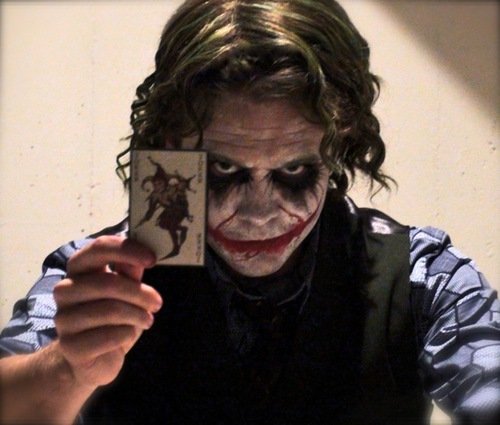
Scott McClure as the Joker
The Joker Blogs is an interesting web series on many levels. At it’s heart it is a fan film, being a direct continuation of Christopher Nolaen’s The Dark Knight. But it has grown into something more than the sum of its parts.
Fan films are nothing new, but they are always tricky to deal with. First off, due to copyright law, you can’t make a profit on them unless you have worked to secure rights, which honestly these kinds of productions can’t afford. So making one is always a labor of love, even if it is also an attempt to show off your film making skills, like the movie Batman: Dead End.
But The Joker Blogs is something more, as it is not just a film, it is a series.
The premise is simple. The series takes place directly after the events of The Dark Knight. The Joker is being held at Arkham Asylum, undergoing evaluation to determine if he is sane enough to stand trial. The first part of the series is presented as tapes from the Joker’s therapy sessions with Dr. Harleen (Harley)Qunizel, which the Joker says are going to be uploaded to YouTube by a friend of his. These episodes play out as a mental cat and mouse game between Harley and the Joker. The second half of the series takes place after the Joker escapes Arkham on Harley’s wedding day. The Joker takes Dr. Jeremiah Arkham hostage and films his antics.
The entire series is done in a ”found footage” style. In total there were 19 episodes of the original series, plus several side videos. Since then there have been six videos released called Further Evidence that have acted as filler and set up as the crew prepares for a second series which is planned to start in April.
The genesis of the series is from the premiere of The Dark Knight in 2008, when Scott McClure attended dressed as the Joker. Several people complimented him on his spot-on impression of the character as played by the late Heath Ledger. Being a film-maker McClure decided to make a video of himself as the character and put it on YouTube. The response to the video was overwhelmingly positive so McClure and his partner Andrew DeVary decided to use it as a pilot for an entire series.
So what makes this series stand out from all the other various fan films that get put online?
The one thing that can make or break a web series like this is the writing. McClure and DeVary have a clear understanding that at his heart, the Joker is a horror movie character. Even in the light hearted early installments, there is a feeling of tension brought on by the character that increases as the series progresses. By the time the Joker escapes, the series has become a horror story with some comedic elements.
The writing would not be enough without the directing and McClure’s direction is superb. In straddling the line between horror and comedy pacing is key. McClure knows that in a show with a low budget, less is more and what you don’t see can be more terrifying than what you do. Add to that the fact that most of the cast are not experienced actors, but still pull off good performances, which I would credit to the direction they received.
As the series presented itself as basically real-time found footage, the show used that to include an interactive element. The Joker would give viewers tasks to do, usually to act as an advertisement for the show. One example was instructing viewers to send Warner Bros. valentines that included the shows web address. Reports are that a few thousand were sent.
Then we have to take a look at the cast.
As the Joker, the whole series is built around McClure’s performance. While it is directly based on Heath Ledger’s performance in The Dark Knight, McClure adds his own touches, and creates the perfect balance between the humor and menace of the character. Since His face is the only one seen in the first 9 episodes (with the exception of a quick cameo by the Scarecrow in episode 6) the series lives or dies by him. Fortunately, McClure is more than up to the task. McClure also plays the character of Dr. Thomas Elliot. It is a credit to his ability as an actor that a lot of fans did not catch that he was the same actor playing the Joker.
Kira Westberg as Harleen Quinzel is the other lead in the series. At first she sounds wooden, but as the series goes on it appears that this was just part of trying to keep professional composure with the Joker. By the end, when she is an onscreen presence, she carries her scenes well, and shows hints of evolving into Harley Quinn.
Steven Molony rounds out the main cast as Jermiah Arkham, Director of Arkham Asylum. Starting out as a bit player in early episodes, once the series leaves the Asylum, Dr. Arkham becomes a major character. Molony conveys the horror of what is going on, showing Dr. Arkham slowly losing his own grip on sanity. Molony also plays Batman in the few bits where he appears.
Once the series was done fans made sure it was known they wanted more. McClure and DeVary set up a successful crowd sourcing campaign to fund it. The series of shorts Further Evidence, focused on different characters, and shows how they deal with the aftermath of series one.
As I said earlier, the next series is scheduled to debut in in April. Further Evidence appears to have set up part of the plot, and the trailer has hints that it will touch on events for The Dark Knight Rises.
Overall The Joker Blogs is an impressive web series and should be checked out if you are a fan of The Dark Knight Trilogy, or if you are interested in the potential of web based series making.
Overall I give it a grade of A-.
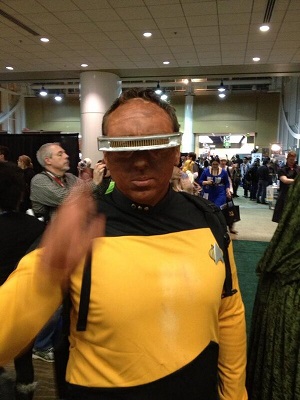 Cosplay is a big part of geek culture, especially at conventions. I have mentioned it before in discussing how people react to it and the effort people put in it. I recently attended Emerald City Comicon and of course there were a ton of people cosplaying.
Unfortunately there were a few costumes that caused something of a stir.
I don’t normally refer to the thumbnail pictures I use here, but this is an exception. The picture I chose today is from Emerald City this year. If you are not sure what you are looking at, it is a man dressed as Geordi La Forge from Star Trek: The Next Generation. The man is clearly white, and has (badly) applied make-up to attempt to make himself appear black. There was also a trio of kids dressed as Michonne from The Walking Dead and her two tamed zombies. These kids were also white and wearing make-up and wigs to appear black.
In both cases, when I saw them, I got the impression that none of them understood the history of blackface, and that not one of them were being malicious. This did not stop several people from taking offense, especially on twitter. As far as I know there were no direct confrontations on the floor.
For those of you confused about why this would be offensive, I suggest you look up the terms “blackface” and “minstrel show.” The quick version is that there was a theatrical tradition that had white performers put on make-up to appear black, with exaggerated features. These shows are a major source of many negative stereotypes of African-Americans. These shows were common up to the beginning of the civil rights movement. Since then, due to these connections people appearing in blackface are consider a racist insult or at the very least racially insensitive.
I want to be clear that I am not saying you cannot cosplay a character of a different ethnicity. At the show I saw very well done She-Ra, Wonder Woman, and Superman costumes done by African-Americans. The difference is that they did not attempt to make themselves look white. They just showed up in costumes of characters they liked and owned it. In fact there is a great Tumblr site, Cosplaying While Black, that you can check out. This is not completely free of controversy as there are some people not comfortable with seeing their favorite characters being portrayed by a different ethnicity. I do not feel these people have a leg to stand on. Just because you are uncomfortable does not mean the cosplayers needs to conform to your tastes.
Unfortunately there are a lot of people using the exact same argument to defend the blackface cosplay. I do not find these equitable arguments.
Basically it comes down a couple of factors.
One is that while blackface is still viewed as a form of racism I think there are a lot of people that are not familiar with it and so had no idea how offensive they were being.
The other is good old fashion white privilege. I assume that these people did not know it was wrong or even take a moment to consider the ramifications. I think that even the attempts to defend them come down to white privilege. For those not sure what I mean, white privilege is the perceived advantages and attitudes that come with being born white in our culture. It also is used to refer to the inability of people born white to understand the perspective of other ethnicities, such as why a person in blackface would be offensive.
And to be clear, I am a white man of middle class background, so I can fall into this trap myself. The reason I usually don’t is that I have been educated enough to know the history and to avoid making those mistakes.
In the case of our four unintentional offenders at Emerald City Comicon, I think the man in the thumbnail is just ignorant and will hopefully learn from this to not go there again. In the case of the kids I think their parents let them down by not educating them on how their choices may not go over as well as they hoped.
And if not I think the world will provide the needed education soon enough.